
China Warns of an AI ‘Super Bubble’ – Lessons from History and the Risk of a Correction in Today’s Concentrated Market
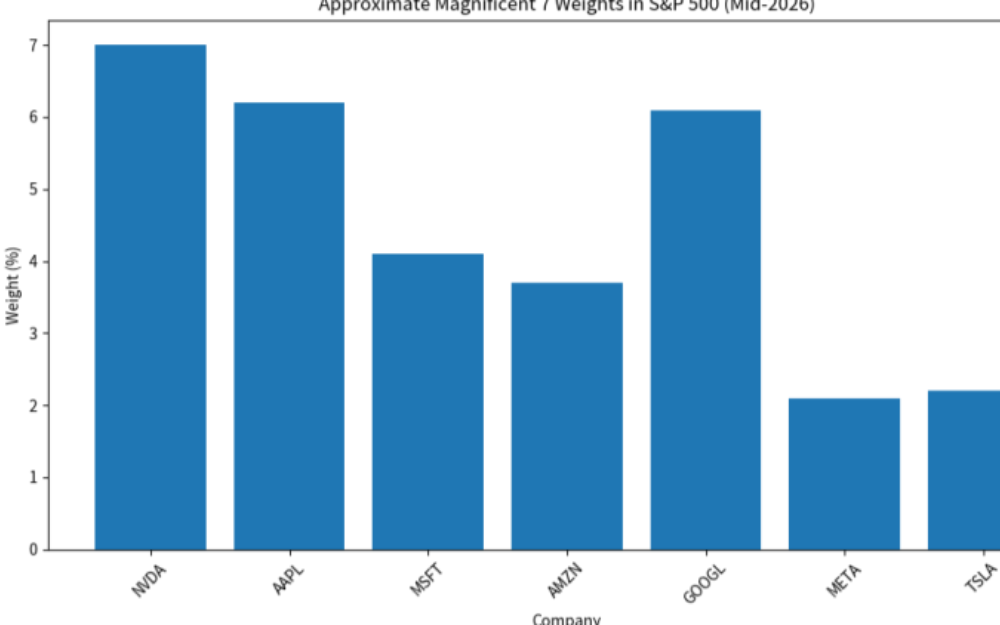
Recent warnings from prominent Chinese hedge fund managers have sent ripples through global markets. Firms like Wealspring Asset and Shanghai Banxia Investment Management Center have labeled the AI boom a “super bubble,” with one noting that “the trigger for the AI bubble to burst has already appeared.” They point to unsustainable valuations, slowing revenue momentum at key players like Anthropic, and massive infrastructure spending that may not deliver near-term returns. As investors, we should take these cautions seriously—but not in panic. Instead, let’s study past bubbles, examine current overvaluations, and assess the odds of a correction. Lessons from History: Bubbles Are as Old as Markets – Financial bubbles follow a familiar pattern: hype around transformative technology or asset class, easy money, irrational exuberance, and eventual reality check. Tulip Mania (1630s), South Sea Bubble (1720), Dot-Com Bubble (late 1990s–2000), and the U.S. Housing Bubble (mid-2000s) all show how speculation detaches prices from fundamentals. The dot-com era is especially relevant: the internet was revolutionary, yet many companies crashed hard. Survivors like Amazon reshaped the world Today’s Warning Signs: Extreme Concentration in the S&P 500 The S&P 500 remains heavily reliant on a handful of AI-linked giants—the Magnificent Seven. As of mid-2026, these 7 stocks out of 500 account for roughly 33% of the index’s total weighting (top 10 nearing 38–40%). Will We See a Correction? Likely yes — timing and severity are the unknowns. AI has real transformative power, supported by stronger fundamentals than pure dot-com hype, but stretched valuations, heavy capex, and concentration create vulnerability. So what can you do? Diversify beyond mega-cap concentration. Prioritise cash-flow generative businesses with realistic AI upside. Maintain discipline and risk management. Markets can stay irrational longer than expected, but history favors the prepared. What are your thoughts? Bullish on AI long-term or bracing for a reset? Share below. #AI #Investing #Markets #RiskManagement #Bubbles Not financial advice. For illustrative purposes only
Has Silver Demand Died?
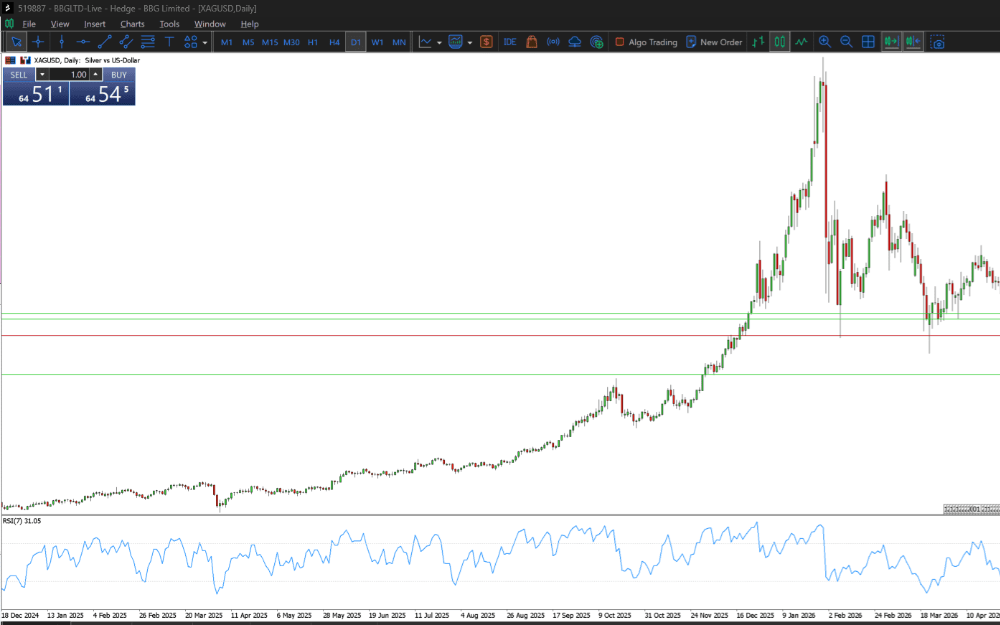
Silver prices have pulled back sharply from their 2026 peak near $122/oz (reached in late January), as shown in the attached daily chart. The chart captures a classic parabolic rally through late 2025 into early 2026, followed by a steep decline with multiple red candles, testing horizontal support levels around $65–70 before the latest leg down. As of late June 2026, silver trades near $64.80–65.05/oz, down significantly from its all-time high. What Drove the Massive Run-Up? Silver’s surge was fueled by a potent mix of: Explosive industrial demand – especially solar PV (photovoltaics), EVs, electronics, and AI/data centers. Industrial use accounts for ~60% of total silver demand, with solar alone consuming hundreds of millions of ounces annually. Investment buying amid macroeconomic uncertainty, debt concerns, and gold’s parallel rally. Structural deficits – the silver market has seen multi-year shortfalls as mine supply (often a copper/zinc byproduct) lags behind consumption. This pushed prices dramatically higher throughout 2025 and into early 2026. Why the Sharp Reversal and Path Toward $56? Recent price action reflects shifting demand dynamics and macro headwinds: India’s Import Restrictions (Major Demand Shock)India, the world’s largest silver consumer (importing ~18–20% of global supply in recent years), imposed heavy curbs in mid-May 2026. High-purity silver bars moved to the “restricted” category (requiring licenses), duties rose sharply (to ~15%), and imports plummeted ~87% in May. While domestic premiums may rise, global demand has softened as India’s buying slows. This removes a key bid from the market. Stronger US Dollar & Hawkish FedRising interest-rate expectations, a stronger dollar, and profit-taking after the parabolic move have weighed heavily on non-yielding assets like silver. Thrifting, Substitution & Demand ModerationHigh prices accelerate efficiency gains (e.g., less silver paste per solar cell) and substitution in some applications. Some forecasts note potential deficit shrinkage in 2026 if industrial offtake cools. Technical Outlook from the Chart: The price has broken below key moving averages and horizontal supports visible in the image (around the $70 green line area). A sustained move below current levels could target the next major support zone near $56–58, aligning with prior consolidation areas and Fibonacci retracement levels from the broader uptrend. RSI is not deeply oversold, leaving room for further downside momentum in the near term. Bullish Counterpoints (Why Not a Straight Crash?) Long-term fundamentals remain strong: green energy transition (solar + EVs), AI infrastructure, and persistent deficits should support prices over years. Any easing of India restrictions, dollar weakness, or renewed investment flows could spark sharp rebounds. Many analysts still see higher averages for 2026 overall, though near-term volatility is elevated. Bottom Line Silver’s run to $65+ (from much lower levels) was impressive but possibly overextended. India’s policy shift has altered demand dynamics in the short-to-medium term, opening the door for a deeper correction toward the $56 zone – a level that would represent a healthy (if painful) reset. Traders should watch US dollar strength, Fed signals, and any updates from Indian authorities. Long-term bulls see this as a buying opportunity in an industrial metal critical to the future, while near-term bears have the momentum. Always manage risk — silver remains highly volatile. If you’re interested in XAG/USD or our new Silver Gram instruments (GAG/USD), I’d love to hear from you. Reach out if you’re thinking about hedging strategies or just want to chat markets – my email is a.lal@blackbull.com. From the desk of AL Trading involves risk and may not be suitable for all investors. The information provided in this article is for educational purposes only and does not constitute financial advice. Always conduct thorough research and seek professional advice before making any investment decisions.
The Rise of Coordinated Hedging Groups in Southeast Asia – A Deep Dive into Risk, Regulation, and Retail Trading Dynamics

In the fast-evolving world of retail forex and CFD trading, Southeast Asia continues to stand out as a powerhouse of retail participation. Countries like Malaysia and Vietnam have seen explosive growth in trader communities, driven by high mobile penetration, improving financial literacy, and access to global brokers offering competitive leverage and tools like negative balance protection (NBP). While most traders focus on technical analysis, risk management, and fundamentals, a more coordinated and controversial phenomenon has emerged: hedging groups. These organised networks, often operating via Telegram, WhatsApp, or local forums, use opposing positions across multiple accounts to exploit specific broker features, particularly NBP during high-volatility events like weekend gaps or volatile market opens. Understanding Negative Balance Protection NBP is a client protection mechanism where brokers reset an account to zero if losses exceed the deposited balance due to extreme market moves (e.g., news-driven gaps). It prevents clients from owing money and is standard for retail clients under many regulators. BlackBull Markets provides it for eligible clients, aligning with our commitment to responsible trading. Brokers absorb these losses (or manage them via hedging/liquidity providers), which is why terms of service often explicitly prohibit abusive practices designed to trigger NBP systematically. The Classic Friday-to-Monday Play The strategy described in trader circles works like this (hypothetical, for educational purposes only): Setup on Friday Close: Two (or more) coordinated accounts/groups take opposing positions on a volatile instrument (e.g., major forex pairs like EURUSD, indices, or commodities). One group/account goes significantly long, the other short. Positions are sized to maximize exposure relative to account balance, often using high leverage. Weekend/Volatile Open Risk: Markets can gap sharply on news (geopolitical events, economic data releases, or thin liquidity). One side moves deep into profit; the other incurs massive losses. The Trigger: The losing side hits negative territory. With NBP, the broker resets that account to zero — effectively “covering” the excess loss. The winning side captures the full (or near-full) profit from the gap/move. Net Outcome: If coordinated well, the group’s collective profit from the winner(s) can exceed the “cost” of the wiped-out account(s). The broker absorbs the negative on the losing side. This is often amplified in groups from Malaysia and Vietnam due to: Strong community networks and social trading culture. Preference for high-leverage brokers accessible to retail traders in the region. Timing around Asian/European session overlaps or global events creating weekend gaps. Similar patterns have been flagged in industry discussions as “group hedging schemes” or multi-account manipulation. This can also be repeated across several brokers. Why Southeast Asia? Cultural, Economic, and Structural Factors Malaysia and Vietnam boast vibrant retail trading scenes: Malaysia: Strong English proficiency, regulatory awareness (via bodies like SC Malaysia), and a growing middle class interested in alternative investments. Traders often blend halal considerations with global markets. Vietnam: Rapid digital adoption, young population, and high appetite for leveraged products. Local groups share signals and strategies efficiently via apps. These factors foster tight-knit communities where collective strategies spread quickly. Economic volatility, currency fluctuations (e.g., VND, MYR), and global risk sentiment make gap trading appealing. However, this isn’t unique to Asia — similar tactics appear globally wherever NBP + high leverage exists. The difference is scale and coordination enabled by regional social dynamics. Risks and Downsides (The Reality Check)While the strategy sounds like “free money” on paper, deep dive reveals significant pitfalls: Broker Countermeasures: Many firms (including sophisticated ones) monitor for abuse patterns — identical/symmetrical positions across accounts, unusual volume at close, etc. Accounts can be flagged, profits withheld, or relationships terminated. NBP often excludes cases of market abuse. Detection and Enforcement: Slippage, partial fills, or requotes during volatility can disrupt symmetry. Brokers share data via liquidity networks. Regulatory Scrutiny: In jurisdictions emphasizing investor protection, systematic exploitation can lead to broader restrictions on leverage or NBP. Capital and Psychological Cost: Wiped accounts require fresh deposits. Greed can lead to over-leveraging across the group, resulting in net losses if moves aren’t extreme enough. Ethical and Long-Term View: This shifts risk unfairly to the broker/ecosystem, potentially raising costs (spreads, commissions) for all traders. Sustainable success comes from skill, not gaming protections. At BlackBull Markets, we prioritise fair execution, deep liquidity, and transparent conditions to support genuine traders, not schemes that undermine market integrity. A Better Path Forward for Asian Traders – Instead of zero-sum games against the broker: Master genuine hedging (where allowed) for risk reduction, not exploitation. Use tools like stop-losses, position sizing, and volatility filters. Leverage education: BlackBull offers resources on risk management and market analysis. Focus on long-term edge: Algorithmic trading, fundamental research, or diversified portfolios. Community value: Shift groups toward signal sharing, education, and collective learning. Southeast Asia’s traders have immense potential. Malaysia and Vietnam are producing sharp, tech-savvy market participants who can compete globally through skill rather than loopholes. I’ve seen the evolution of retail trading firsthand. We remain committed to providing robust platforms (MT4/MT5/cTrader), tight spreads, and fast execution — while enforcing policies that protect the ecosystem for serious traders. What are your thoughts? Have you encountered coordinated strategies in your markets? Share responsibly in the comments — let’s discuss ethical innovation in trading. Risk Warning: Trading involves substantial risk of loss. Negative balance protection does not guarantee profits and is subject to terms. Always trade responsibly.
Modi Telling Indians Not to Buy Gold Is Like Telling an Indian Mum Not to Make More Rotis

Prime Minister Narendra Modi has dropped a cultural bombshell: for the next year, Indians should skip buying gold jewelry, even for weddings, functions, or festivals. This comes amid the fallout from the Iran conflict, surging oil prices, and pressure on India’s foreign exchange reserves. It’s like asking an Indian mother to stop making extra rotis “just this once.” Gold isn’t just an asset here, it’s woven into our DNA. What Does This Mean? Modi’s appeal is a patriotic call to conserve foreign currency. India imported a record ~$72 billion worth of gold in FY26, up sharply due to high global prices. Almost all of it is imported, draining dollars at a time when expensive crude oil imports are already straining the current account and the rupee. The goal? Reduce non-essential dollar outflows for at least a year. Modi paired this with calls to cut fuel use, work from home more, and skip unnecessary foreign travel. It’s voluntary patriotism, not a ban — but the message is clear: help protect the nation’s reserves during global turbulence. Indians’ Eternal Love for Gold Gold is more than jewelry in India — it’s security, status, tradition, and investment rolled into one. We are the world’s second-largest gold consumer after China. Demand spikes during weddings (10-12 million annually), festivals like Akshaya Tritiya and Dhanteras, and as a hedge against inflation and uncertainty. Families buy it for brides, investments, and rituals. It’s physical wealth you can pass down generations. Convincing 1.4 billion people to pause that habit — even temporarily — is an uphill task. Many analysts expect the impact to be more psychological than total, with demand shifting toward lighter pieces, digital gold, or ETFs rather than vanishing. Immediate Impact on Indian Stocks Markets reacted instantly. Jewelry stocks took a beating on fears of slowed demand: Titan (Tanishq) dropped sharply (around 6-8%) Kalyan Jewellers and Senco Gold fell 9-12% intraday Other players like Sky Gold also slid significantly Investors worried about wedding season sales and potential higher import duties if voluntary compliance falls short. Broader indices were mixed, but the jewelry and retail sectors clearly felt the pinch. Gold-related importers and bullion traders also watched nervously. Will This Shift Global or Indian Gold Prices? Short-term: Gold prices stuttered and wavered after the announcement, as India’s massive demand (a key driver) faces potential softening. Longer-term outlook: Don’t bet against gold rising. Global factors dominate — geopolitical risks, central bank buying, inflation hedges, and USD dynamics. India is a price taker, not maker. Even with reduced local buying, strong international demand (especially from China and investors) supports prices. Domestic prices (already at record highs around ₹1,47,000+/10g levels recently) could see some softening if imports drop 30-40%, but analysts see the uptrend intact due to broader macro forces. Gold remains a strong hedge. If anything, Modi’s call highlights why it’s valuable — and why conserving forex matters when buying it costs so much in dollars. The Bigger Picture for Investors This isn’t the end of India’s gold story — it’s a temporary patriotic pause during energy and geopolitical stress. Smart investors might look at: Diversified exposure (gold ETFs, sovereign gold bonds — which don’t involve physical imports) Opportunities in jewelry stocks if they oversell (long-term demand resilience is high) Broader rupee defense and economic resilience plays At BlackBull, we believe in understanding these cultural + macro intersections. Gold’s shine isn’t fading — but timing and form (physical vs. financial) matter more than ever. What are your thoughts? Will Indians heed the call, or will “just one more necklace” win out? Drop your views below — let’s discuss how this plays out for markets, savings, and sentiment. Anish at BlackBull #Gold #IndiaEconomy #Modi #Investing #Forex #JewelryStocks
BlackBull Markets is heading to NZCryptoCon 2026!

BlackBull Markets is heading to NZCryptoCon 2026! I’m excited to share that BlackBull will be at New Zealand’s very first major crypto event NZCryptoCon 2026, taking place from 5th to 7th June at the Auckland ICC. This is our first time at the event, and we can’t wait to meet the Kiwi crypto community in person! Come find us at Booth 101, where we’ll be showcasing: Our powerful Crypto CFDs — tight spreads, deep liquidity, 30+ top coinsOur brand-new Perpetual Futures with up to 100x leverage Whether you’re a serious trader or just getting into crypto, we’re bringing the professional tools you’ve been looking for. Special for NZCryptoCon:Use code Blackbull for 10% off all tickets https://lnkd.in/ekXihuBh Drop a comment if you’re attending, or message me if you want to catch up at the booth. Looking forward to some great conversations!See you 5–7 June at Auckland ICC – Booth 101 https://anish.trade/wp-content/uploads/2026/05/WhatsApp-Video-2026-05-13-at-9.14.45-AM.mp4
Why the Kiwi is Under Pressure and What It Means for New Zealand

The AUD/NZD cross has been one of the standout performers in the G10 FX space in 2026, recently hitting multi-year highs near 1.2210–1.2213 in early May. This marks a roughly 13% gain over the past year and levels not seen consistently since around 2013. The driver? Clear monetary policy divergence between the Reserve Bank of Australia (RBA) and the Reserve Bank of New Zealand (RBNZ), compounded by differing economic resilience and investor preferences for the Aussie. Policy Divergence: RBA Hawkish, RBNZ Cautious The RBA has hiked its cash rate to 4.10% (with hikes in early 2026, including a narrow 5-4 vote in March), responding to persistent inflation pressures, tighter labor markets, and upside risks from global factors. Markets have priced in potential further tightening, with the next meeting on May 5, 2026, seeing expectations around additional hikes. In contrast, the RBNZ has held the Official Cash Rate (OCR) steady at 2.25% (latest decision April 8, 2026), emphasizing a data-dependent but generally accommodative stance amid economic recovery challenges, despite some near-term inflation bumps from external shocks. The policy gap, approaching or exceeding 1.85 percentage points in recent contexts, which heavily favors the AUD in the carry trade and broader positioning. This divergence has widened meaningfully, with investors favoring the higher-yielding, resource-backed Aussie amid stronger Australian growth prospects (projected around 2.1–2.3% in coming periods) versus more modest NZ figures. Medium- to Long-Term Chart Analysis On the daily and weekly charts, AUD/NZD maybe exhibits a strong bullish structure: It has broken out of multi-year ranges and is consolidating near historic highs above 1.20. Technicals show strong buy signals from moving averages, with support around 1.215–1.218 (recent pivot lows and ascending triangle bases). Resistance sits near 1.2210–1.2300 initially, with longer-term eyes on 1.25–1.30+ if divergence persists, per some analyst projections into 2026–2027. Rate expectations reinforce this: Forecasts suggest Australia’s rates could remain elevated relative to NZ’s gradual normalisation path (potentially not aggressive hikes until late 2026 or beyond). Bond yield gaps and carry advantages support AUD strength. Risks include global risk-off moves or commodity volatility (Australia benefits from iron ore/ resources; NZ from dairy), but the bias remains upward for the cross medium-term. Pullbacks to 1.19–1.20 could be buying opportunities on the trend. Impacts on New Zealand’s Economy A weaker NZD (stronger AUD/NZD means fewer NZD per AUD) has clear sectoral effects: Exports: A softer Kiwi boosts competitiveness. NZ exporters (dairy, meat, tourism services, etc.) earn more in local currency terms when selling to Australia or markets where pricing competes with AUD. This helps offset some domestic weaknesses but can mask underlying productivity or volume issues. Trade: Australia is a major partner under CER. Cheaper NZ goods/services for Aussies could support bilateral trade volumes, while NZ imports from Australia (machinery, vehicles, etc.) become more expensive, potentially adding to imported inflation. Overall, net trade balance may improve modestly for NZ on the export side. Tourism: This is a tale of two sides. Aussies get cheaper holidays “across the ditch” (boosting inbound NZ tourism), but Kiwis face higher costs traveling to Australia, causing a dampening outbound spending. With fuel and airfares also elevated, this exacerbates the pain for Kiwi travelers. Migration and Broader Pressures: Record numbers of Kiwis are heading to Australia (net loss hitting 12-year highs), drawn by higher wages, opportunities, and now amplified by the currency gap making remittances or savings stretch further in NZ terms. This doesn’t help NZ’s labor shortages or growth outlook, creating a potential brain/skill drain that compounds economic challenges. Outlook and Trading Considerations (BlackBull Perspective) The AUD/NZD story is a textbook policy-divergence play. While short-term volatility from data releases (e.g., CPI, employment) or global events can cause swings, the medium- to long-term setup potentially favors AUD strength as long as the RBA stays firmer for longer. Traders should watch RBA’s May decision closely for confirmation of further hikes. At BlackBull Markets, we see opportunities in this cross for both directional trades and carry strategies, but always with robust risk management given the commodity and geopolitical sensitivities. NZ’s challenges with a weak currency add urgency for structural reforms, while Australia rides relatively stronger fundamentals. If you’re exposed to this pair, I’d love to hear from you. Reach out if you’re thinking about hedging strategies or just want to chat markets – my email is a.lal@blackbull.com. Stay sharp out there, From the desk of AL Trading involves risk and may not be suitable for all investors. The information provided in this article is for educational purposes only and does not constitute financial advice. Always conduct thorough research and seek professional advice before making any investment decisions.
Brazil Just Banned Prediction Markets. The Rest of the World Is Watching.

On April 24, 2026, Brazil’s government dropped a bombshell: it blocked access to 28 prediction market platforms, including heavyweights like Polymarket and Kalshi, labeling them as illegal betting operations. Finance Minister Dario Durigan and officials made it crystal clear during a press conference that these platforms breach the country’s regulated betting framework and expose citizens to unnecessary financial risks. The National Monetary Council’s Resolution No. 5,298 explicitly prohibits derivative contracts tied to sports events, elections, politics, entertainment, or any non-financial “real or virtual events.” Telecom regulator Anatel acted swiftly, using the same blocking tools deployed against unlicensed gambling sites. The resolution takes full effect on May 4, 2026. Why This Matters for Operators Worldwide Prediction markets have exploded in popularity, blending finance, information aggregation, and yes, elements that regulators increasingly view as high-risk betting. Brazil’s move isn’t isolated; it’s part of a broader global push to classify event-based contracts as gambling when they fall outside strict financial derivatives rules. For operators, especially those in high-risk or gray-area verticals, this is a stark reminder: Regulatory arbitrage has limits. One major market can shut the door overnight. Compliance isn’t optional. Platforms must align with local licensing, or risk domain blocks, fines, and reputational damage. Domino effect potential. What starts in Latin America’s largest economy can influence regulators in Europe, Asia, and beyond, who are already scrutinising similar products. Prediction Markets, Payments, and the Legal Minefield Operators Cannot Afford to Ignore Prediction markets thrive on liquidity, speed, and user access — but they sit at the dangerous intersection of derivatives, gambling, and fintech. Regulators worldwide are tightening screws: Distinguishing between legitimate hedging/information markets and disguised fixed-odds betting. Payment processors are facing increased scrutiny for facilitating these flows. KYC/AML obligations are colliding with the pseudonymous appeal that draws many users. Ignoring these nuances isn’t just risky; it’s existential. A single cease-and-desist or network-level block can evaporate user bases and revenue streams. High-risk operators know this terrain well: adapt fast or watch margins evaporate. Actionable Takeaways for the Industry Diversify jurisdictions proactively — Don’t put all eggs in one basket. Build compliance-first infrastructure — From product design to payment rails. Engage regulators early — Where possible, shape the conversation before bans hit. Monitor global signals — Brazil today could be your market tomorrow. The prediction market boom continues in permissive environments, but the Brazil crackdown proves regulators are paying close attention. For operators in payments, betting, and fintech — stay vigilant, stay compliant, and stay ahead of the curve. The game is evolving. Complacency is not an option. Anish from BlackBull here — navigating these shifts with operators who refuse to be caught off guard. What are your thoughts on Brazil’s ban? Will it slow innovation or push the industry toward better-regulated models? Drop your comments below. Let’s discuss.
2026 Oil Market Dynamics: From Geopolitical Spikes to Physical Delivery Nightmares

As we sit in April 2026, Brent crude is hovering near $100–$110/bbl thanks to Middle East tensions, Strait of Hormuz disruptions, and production shut-ins. But the longer-term story? Most analysts are calling for a return to oversupply later this year, with 2026 averages projected anywhere from the mid-$50s to low-$80s depending on how quickly geopolitics cools off. Supply is expected to comfortably outpace demand in the back half of the year as non-OPEC+ production (especially US shale, though slowing) and potential OPEC+ quota increases flood the market. Demand growth is modest at best — some forecasts even see slight contraction amid economic uncertainty. Physical Delivery: When “Futures” Stops Being a Metaphor I recently saw a viral photo (okay, I may have enhanced it) of a beautiful suburban mansion and several hundred oil barrels taking over the front lawn like an uninvited HOA violation. This isn’t just meme material. It’s a cautionary tale. Interactive Brokers (and most retail brokers) are very clear: They do not want you taking physical delivery. Their policies explicitly state they generally don’t allow clients to make or take delivery on physical commodity futures like crude oil. You must close out or roll positions before the close-out deadlines, or they’ll liquidate you to avoid the headache. Why? Because nobody wants a retail trader waking up to a tanker truck dumping WTI in their driveway. “Sorry sir, the contract said ‘physical settlement’ — enjoy your new black gold landscaping!” In a world of paper trading, algorithms, and ETFs, the occasional reminder that oil futures can actually result in real barrels arriving at your door is both hilarious and terrifying. Who else has a “favorite” physical delivery horror story (real or imagined)? Or are we all just happily trading /CL and praying the broker saves us from ourselves?
The Evolution of Sports Sponsorships in FX: From Football Fields to Cricket Pitches and Tennis Courts – And Why It’s Mostly About Branding

I get pitched sponsorship opportunities almost weekly. The latest wave? Formula 1 deals, with minimum asks starting around $2 million USD for meaningful visibility. It’s a familiar conversation in our industry: sports sponsorships have become a go-to marketing play for forex and CFD brokers. But let’s take a step back. How did we get here, and is the spend actually delivering the returns everyone hopes for? A Brief History: How FX Brokers Discovered Sports The trend kicked off around 2010 when FxPro made waves by sponsoring Premier League clubs like Fulham and Aston Villa, as well as early involvement with Virgin Racing in Formula 1. It was a smart move at the time. Retail forex trading was exploding, and brokers needed a way to reach a young, male, globally dispersed audience that loved speed, competition, and performance, qualities that mirror trading itself. Football quickly became the dominant arena. Brokers like Plus500 (Atlético Madrid), eToro (multiple clubs across Europe), Libertex (Bayern Munich), and others poured millions into shirt sponsorships, stadium branding, and official partnerships. At one point, football accounted for the majority of online trading sponsorship spend, with brokers chasing the massive global TV audiences and passionate fanbases. The strategy soon diversified: Cricket gained traction in key growth markets like India, Australia, and emerging regions. Brokers targeted regional teams or players to tap into cricket’s dedicated following where football isn’t king. Tennis offered a more premium, individual-athlete angle — global reach with opportunities for targeted territorial deals around major tournaments or players. Other sports followed: rugby, golf, basketball (e.g., Plus500 with Chicago Bulls), and of course, a renewed interest in Formula 1 as the sport’s popularity surged with new audiences and digital platforms. Today, brokers spread bets across football, motorsport, and niche/local sports to avoid clutter and align with specific regional priorities. The industry has collectively invested hundreds of millions into these deals over the past 15+ years. The ROI Reality: Strong Branding, Challenging Direct Returns Here’s the honest conversation many in the sector have privately: measuring precise ROI on sports sponsorships is tough, and for many brokers, the primary value is branding and credibility rather than immediate client acquisition or trackable conversions. Sports partnerships deliver clear benefits: Massive brand exposure through TV broadcasts, stadium signage, digital content, and fan engagement. Association with success, precision, and performance — values that resonate with traders who see parallels between elite athletes/teams and disciplined market analysis. Trust and legitimacy boost. In a competitive, sometimes skeptical industry, appearing alongside respected clubs or events signals stability and professionalism. However, turning that visibility into measurable account openings or trading volume often proves elusive. Many brokers struggle to attribute direct revenue to these spends. Media value calculations help, but lead generation, conversion tracking, and long-term client lifetime value are harder to pin down. The clutter in popular spaces like the Premier League means diminishing marginal returns for some. It’s why smarter players now mix high-profile deals with targeted, regional, or lower-cost partnerships. In short: it’s often more art than science — a long-term play for brand equity rather than a short-term acquisition channel. Our Approach at BlackBull Markets: Auckland FC as a Case Study At BlackBull Markets, we believe sponsorships should align authentically with our brand and deliver more than just logos on shirts. That’s why we’re proud to be the Official Trading Partner of Auckland FC in New Zealand’s A-League. As a premium sponsor, this partnership brings our brand into the heart of our home market while showcasing our commitment to supporting local excellence. The benefits we see go beyond exposure: It builds trust and credibility with both existing and potential clients who appreciate a broker that’s embedded in the community. It puts real eyes on the brand in a meaningful way — through matchdays, fan content, and regional storytelling. It creates genuine engagement opportunities that feel less like advertising and more like shared values. We’re selective. Not every big-ticket opportunity fits, even when the glamour (hello, F1) is tempting. The key is alignment: does this partnership reinforce what BlackBull stands for — reliable execution, innovation in trading, and long-term client success? Final Thoughts: Sponsorships as Part of a Balanced Strategy Sports sponsorships remain a powerful tool for FX brokers, especially as traditional digital advertising faces rising costs and regulatory scrutiny. But they work best when viewed as a branding investment within a broader, multi-channel marketing mix — complemented by performance marketing, content, education, and strong product fundamentals.If you’re on the brand or sponsorship side and considering a deal, ask the hard questions upfront: What does success look like beyond impressions? How will we measure and activate the partnership? And does it truly fit our audience and values? I’d love to hear from fellow professionals in trading, sports marketing, or sponsorships. Have you seen strong ROI from sports deals, or do you view them primarily as brand builders? What’s the smartest sponsorship strategy you’ve observed in fintech or finance lately? Drop your thoughts in the comments — let’s discuss.
AI Agents for Brokers: Navigating the Flood of CRM and Phone Company Pitches
As someone deeply involved in operations at BlackBull Markets my inbox and calendar are constantly flooded with outreach from CRM platforms and phone/telecom providers. Every week brings new demos, case studies, and bold claims about their latest AI agents with autonomous systems that promise to qualify tens of thousands of monthly registrations, automate email nurturing, handle phone inquiries, reduce support costs by 50-90%, and even boost funded account conversions. These pitches are relentless and increasingly sophisticated. “Let our agentic AI take over your lead response,” one CRM vendor says. “Our voice AI phone agents will qualify traders 24/7 at a fraction of human cost,” adds a telecom partner. With our scale, handling high volumes of registrations from traders across 180+ countries, the temptation to lean heavily into automation is real. But in an industry where trust is the ultimate currency, the real question isn’t whether AI agents can handle volume. It’s whether they should dominate sales and service workflows, how much human access clients will (and should) retain, and what this shift truly means for business outcomes and customer experience. The Volume Reality and the AI Sales Push Brokers like BlackBull routinely see tens of thousands of registrations per month, fueled by digital marketing, affiliates, and global retail interest in forex, CFDs, metals, and indices. Most inquiries are repetitive: spreads on major pairs, verification timelines, margin explanations, or deposit questions. Manual teams can’t scale efficiently without burnout or delays. That’s exactly why CRM giants and phone/voice AI providers are pushing hard. Their agentic AI systems that don’t just chat but act autonomously, integrate with your existing tools, trigger workflows, and escalate intelligently, is marketed as the solution for 2026. Early industry data backs some of the hype: AI-powered onboarding and conversational support have delivered 15-20% lifts in funded account conversions for brokers, with support handle times dropping 50-65%. Voice and email agents can run 24/7 in multiple languages, qualifying leads, sending personalized follow-ups, and resolving routine issues without human intervention. The focus is shifting toward more automated email sequences, real-time chat/voice responses, and proactive nurturing. Vendors promise seamless integration with MT4/MT5, KYC flows, and your CRM, turning raw registrations into scored, nurtured prospects faster than ever. Will Clients Still Reach a Human? Yes—and this hybrid approach is non-negotiable for building lasting trust. Pure automation sounds efficient on a sales deck, but forex and CFD trading involves real money, leverage, risk management, and emotional decisions. Traders want speed for simple queries, yet they expect empathy, clear explanations, and accountability when issues arise—like withdrawal delays, margin calls, or platform questions during volatile markets. Transparency is critical. Clients should know when they’re speaking with AI (“I’m an intelligent assistant powered by BlackBull’s knowledge—how can I assist?”) and have a one-click path to a human. Over-promising autonomy without easy escalation risks frustration and churn Partnering with Conv.rs Building a Knowledge-Rich AI Bot Amid the constant stream of pitches, we evaluated several platforms and decided to collaborate with Conv.rs, an omnichannel messaging solution specifically tailored for forex and CFD brokers. Their focus on AI chatbots for lead qualification, 24/7 support, and deep integration with broker workflows made them a strong fit for our needs. We worked closely with the Conv.rsteam to build a custom AI bot powered by their platform. A key part of the project involved ingesting thousands of FAQ articles, knowledge base entries, trading guides, and policy documents into the AI’s knowledge repository. his included everything from basic account setup questions and spread comparisons to detailed explanations of margin requirements, withdrawal processes, risk disclosures, and platform-specific features like our raw spreads from 0.0 pips and deep liquidity pools. The result is a highly contextual AI assistant that draws directly from BlackBull’s own content. It delivers accurate, consistent, and brand-aligned responses in real time across website chat, WhatsApp, and other channels. This partnership has already shown promising early results in reducing response times and improving first-contact resolution rates for common trader questions. Importantly, the system is designed with clear escalation paths: when the query involves nuance, emotional context, or personalized trading advice, it seamlessly routes to a live agent. Our experience with Conv.rs reinforced a core lesson—success depends less on the hype and more on how well the platform ingests and reasons over your specific knowledge base, while preserving the human touch that builds trust. Business and Customer Service Impact: Opportunities vs. Trust Risks The Upside for Brokers Like BlackBull: Scalability Without Proportional Costs: Handle volume spikes efficiently. Sales teams shift from repetitive qualification to closing high-intent traders. Support focuses on value-added advice rather than basics. 24/7 Global Reach: Multilingual AI levels the playing field for clients in different time zones—vital for a broker serving diverse markets. Data-Driven Insights: AI analyzes registration patterns, engagement, and churn signals to refine offerings (e.g., highlighting our raw spreads from 0.0 pips, deep liquidity, or account types). Compliance Support: Flagging issues early while keeping responses within regulatory lines. Regulatory scrutiny adds another layer: accountability remains with the broker. AI must be auditable, explainable, and backed by human oversight—especially for advice-adjacent topics. The shift won’t (and shouldn’t) eliminate humans. Instead, it elevates their role to high-touch relationship building, while AI manages volume. Brokers that over-automate risk damaging the personal connection that differentiates reputable players. Those that integrate thoughtfully—starting small with low-risk tasks like email nurturing or FAQ handling—can reinvest savings into tighter execution, better tools, or enhanced client education. Will It Work for Us in Forex Brokerage? Yes, but only with discipline and a client-first lens. The pitches from CRM and phone companies are loud for a reason—agentic AI is maturing rapidly in 2026, moving beyond basic chatbots to task-completing systems. For BlackBull, with our focus on regulation (FMA New Zealand, FSA Seychelles), low-cost institutional execution, and trader-centric features, AI agents can enhance scalability without compromising our reputation. The future isn’t AI replacing humans or humans ignoring technology. It’s intelligent collaboration: AI handling scale so our team can deliver the trusted, expert service traders deserve. We’re excited about