Forex trading is built around understanding price movement, market behaviour and the factors that influence currencies. While modern trading platforms provide traders with an enormous amount of information, charts and analytical tools, having access to more data does not automatically lead to better trading decisions.
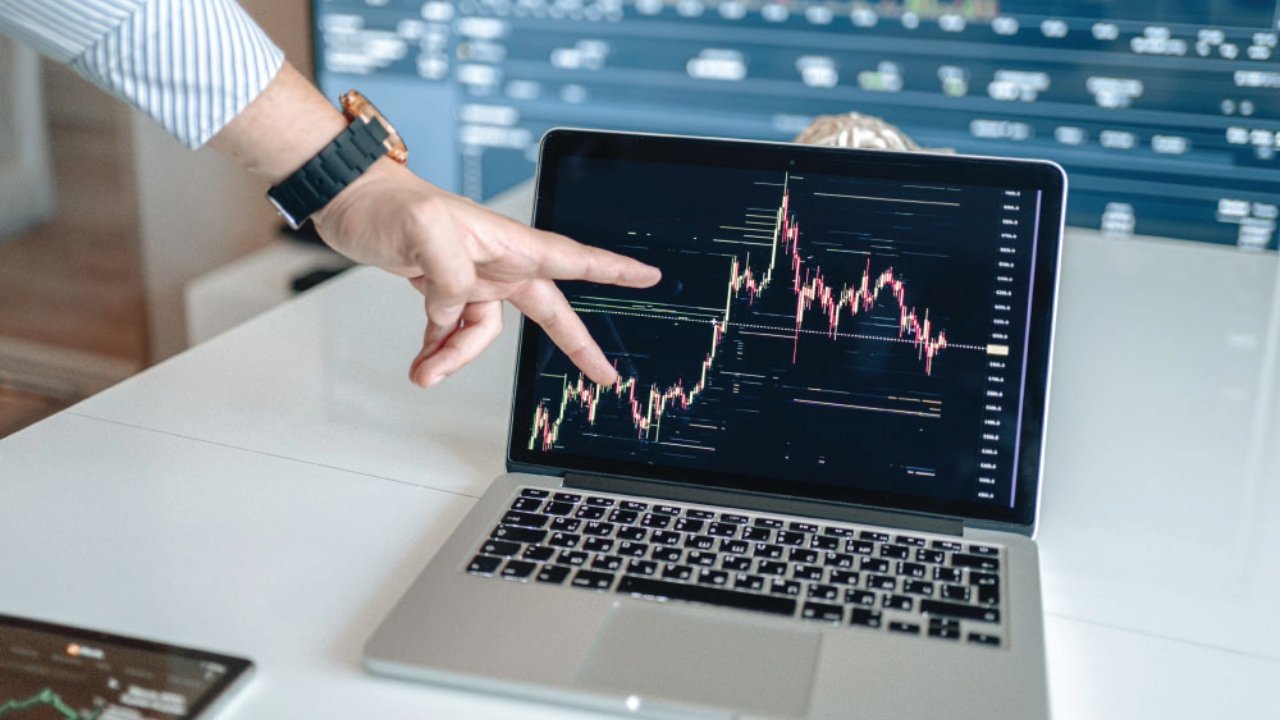
A successful approach begins with understanding what the market is communicating. Price charts allow traders to observe trends, momentum, volatility and areas where buyers and sellers have previously reacted. This information can help create a structured framework for evaluating potential opportunities rather than making decisions based purely on emotion.
Technical analysis is commonly used to study historical price behaviour. Traders may examine trends, support and resistance levels, chart patterns and momentum to understand how a market is behaving. The objective is not to predict every movement perfectly, but to identify situations where the probability of a particular outcome may be more favourable.
Fundamental analysis provides another perspective. Currency markets can react strongly to interest-rate decisions, inflation, employment figures, economic growth and statements from central banks. These factors can influence expectations about an economy and consequently affect the value of its currency.
Many traders combine technical and fundamental analysis rather than relying entirely on one method. Fundamental information can provide broader market context, while technical analysis may help traders identify potential entry and exit areas.
However, analysis alone is not enough. Risk management remains one of the most important components of any trading strategy.
No matter how convincing a market setup appears, there is always a possibility that the trade will move in the opposite direction. Professional trading therefore requires traders to consider potential losses before focusing on potential profits.
Position sizing can help control this exposure. Taking excessive risk on a single trade can create significant pressure on an account and may also influence emotional decision-making. A structured approach aims to keep individual outcomes within manageable limits.
Market volatility also needs to be considered. Forex markets can become significantly more active during major economic announcements, central-bank decisions and unexpected geopolitical developments. During these periods, prices may move rapidly and normal trading conditions can change.
Traders should therefore understand that market behaviour is not constant. A strategy that performs effectively during a stable trending environment may behave differently when markets become highly volatile or move within a narrow range.
This makes adaptability important, but traders should avoid changing their entire strategy after every unsuccessful trade. Losses are a normal part of financial markets and do not automatically mean that a trading method has failed.
A more useful approach is to evaluate performance across a meaningful number of trades. Maintaining a trading journal can help identify which setups are performing well, where mistakes are occurring and whether trading rules are being followed consistently.
Psychology is another major factor. Fear, greed, frustration and overconfidence can all influence trading decisions. Even a technically strong strategy can become ineffective when a trader repeatedly ignores its rules.
Patience can therefore be as important as market knowledge. Traders do not need to participate in every price movement. Waiting for conditions that match a predefined strategy can help reduce unnecessary trades and emotional decisions.
Technology has made forex markets easier to access than ever before. Traders can monitor charts, analyse markets and execute orders almost instantly from desktop and mobile platforms.
Yet technology should remain a tool rather than a replacement for judgement. More indicators, charts or automated signals do not necessarily create a better strategy. In many cases, a clear and understandable process can be more valuable than an unnecessarily complicated trading system.
The objective should be consistency. Traders should understand why they are entering a position, where the idea becomes invalid, how much capital they are risking and under what conditions they intend to exit.
This creates a repeatable process that can be reviewed and improved over time.
Ultimately, successful forex trading is not about predicting every market movement. Financial markets contain uncertainty, and no analytical method can eliminate that uncertainty completely.
A professional trading approach combines market analysis with disciplined risk management, realistic expectations and continuous evaluation.
Traders who understand the market environment, control their exposure and remain consistent with their strategy are better positioned to navigate changing market conditions.
Charts can provide valuable information, but the real advantage comes from how that information is interpreted and converted into disciplined decisions. Building that process takes time, experience and continuous learning, making trading development an ongoing journey rather than the search for a perfect indicator or guaranteed strategy.