
BlackBull CBDO: AI is killing the FX/CFD broker CPA model

This is a guest post by Anish Lal. Anish has been active in the trading industry for over a decade and is Chief Business Development Officer at BlackBull, a New Zealand-based brokerage business For years, the broker industry ran on a simple acquisition formula for media related deals: review sites ranked you, affiliates sent you traffic, and you paid CPA when a client funded. It could get messy, expensive, and occasionally theatrical, but systems like CellExpert, which is widely used, helped to track RoI and the job of a partnership officer (or affiliate manager) is to monitor this. That model is now being rewritten, and not by another marketing platform. It is being rewritten by AI. Traders used to start with Google, bounce through a handful of comparison pages, scan Trustpilot, then maybe click an affiliate link. Today a growing number of them just ask ChatGPT, Gemini or Perplexity: who should I trade with? Those engines have been trained on decades of industry content, review sites, forums, regulator notices, Trustpilot scores, YouTube rants, forum comments from years ago…and more. The first shortlist a trader sees is no longer a paid placement. It is a synthesis. We are already seeing the commercial consequences. At BlackBull we have recorded around a 30% increase in leads from ChatGPT and other AI search tags, with the lift most visible in APAC and the EU. That is not a vanity channel. It is showing up in the CRM with UTM source chatgpt.com and similar AI tags attached. Review sites are changing the deal The review sites know this. Many are moving away from pure CPA and asking for fixed monthly placement fees instead. From their side, the logic is obvious: if they cannot reliably control the click, they would rather lock in a retainer than wait for a conversion that may now happen inside an AI answer box. Those fees are also becoming more competitive. As AI engines get better at weighing regulation, execution reputation and review quality, the value of a generic “top 10 brokers” page declines. A site without real readership or loyalty will struggle to justify the old performance model. The legacy brands with traffic, trust and a recognisable name can still command a higher placement fee. Everyone else is negotiating from a weaker position. That does not mean review sites disappear. It means the middle of the market gets thinner. If you do not have readership or loyalty, you lose direct traffic and clicks. AI has already eaten a slice of the discovery journey those sites used to own. Affiliates, IBs and the squeeze. Brokers have tried to route around this by pushing affiliate relationships into the IB space, which revolves around turning introducers into longer-term revenue partners rather than one-off CPA deals. That can work. An IB with a real book and a real relationship is harder for an AI chatbot to replace than a review page with a cookie. But it is not a complete answer. IBs still compete with the same AI-shaped first impression. If the model has already told a trader three brokers it considers reliable, the introducer is arriving later in the funnel. CPA is not dead. It is just no longer the default. Performance deals will survive where the partner can prove incremental value for unique audiences, high-intent communities, or conversion that AI cannot replicate. Fixed placements will survive where the brand still moves the needle. Everything in between is under pressure. What this means for traders (and us) For traders, this is mostly good news. More of the decision is being informed by accumulated public records rather than whoever paid the most that month. The catch, of course, is that AI is only as good as the content it was fed. Garbage in still produces a confident-sounding shortlist. For brokers, the implication is uncomfortable and useful at the same time. You cannot buy your way to the top of an AI answer the way you once bought a review-site slot. Reputation, regulation, reviews and years of content now compound in a new distribution layer. The firms that treated Trustpilot, service quality and public track record as afterthoughts will feel that first. We are not predicting the end of affiliates. We are saying the old CPA-only stack is losing its monopoly on discovery. AI did not invent broker selection. It just compressed twenty years of industry content into a single conversation and a growing number of traders in APAC and Europe are starting there. This being said, I write this on my lunch break reviewing our quarter spend on brand partners and the costs have increased. However, so has RoI.
China Warns of an AI ‘Super Bubble’ – Lessons from History and the Risk of a Correction in Today’s Concentrated Market

Recent warnings from prominent Chinese hedge fund managers have sent ripples through global markets. Firms like Wealspring Asset and Shanghai Banxia Investment Management Center have labeled the AI boom a “super bubble,” with one noting that “the trigger for the AI bubble to burst has already appeared.” They point to unsustainable valuations, slowing revenue momentum at key players like Anthropic, and massive infrastructure spending that may not deliver near-term returns. As investors, we should take these cautions seriously—but not in panic. Instead, let’s study past bubbles, examine current overvaluations, and assess the odds of a correction. Lessons from History: Bubbles Are as Old as Markets – Financial bubbles follow a familiar pattern: hype around transformative technology or asset class, easy money, irrational exuberance, and eventual reality check. Tulip Mania (1630s), South Sea Bubble (1720), Dot-Com Bubble (late 1990s–2000), and the U.S. Housing Bubble (mid-2000s) all show how speculation detaches prices from fundamentals. The dot-com era is especially relevant: the internet was revolutionary, yet many companies crashed hard. Survivors like Amazon reshaped the world Today’s Warning Signs: Extreme Concentration in the S&P 500 The S&P 500 remains heavily reliant on a handful of AI-linked giants—the Magnificent Seven. As of mid-2026, these 7 stocks out of 500 account for roughly 33% of the index’s total weighting (top 10 nearing 38–40%). Will We See a Correction? Likely yes — timing and severity are the unknowns. AI has real transformative power, supported by stronger fundamentals than pure dot-com hype, but stretched valuations, heavy capex, and concentration create vulnerability. So what can you do? Diversify beyond mega-cap concentration. Prioritise cash-flow generative businesses with realistic AI upside. Maintain discipline and risk management. Markets can stay irrational longer than expected, but history favors the prepared. What are your thoughts? Bullish on AI long-term or bracing for a reset? Share below. #AI #Investing #Markets #RiskManagement #Bubbles Not financial advice. For illustrative purposes only
The Rise of Coordinated Hedging Groups in Southeast Asia – A Deep Dive into Risk, Regulation, and Retail Trading Dynamics

In the fast-evolving world of retail forex and CFD trading, Southeast Asia continues to stand out as a powerhouse of retail participation. Countries like Malaysia and Vietnam have seen explosive growth in trader communities, driven by high mobile penetration, improving financial literacy, and access to global brokers offering competitive leverage and tools like negative balance protection (NBP). While most traders focus on technical analysis, risk management, and fundamentals, a more coordinated and controversial phenomenon has emerged: hedging groups. These organised networks, often operating via Telegram, WhatsApp, or local forums, use opposing positions across multiple accounts to exploit specific broker features, particularly NBP during high-volatility events like weekend gaps or volatile market opens. Understanding Negative Balance Protection NBP is a client protection mechanism where brokers reset an account to zero if losses exceed the deposited balance due to extreme market moves (e.g., news-driven gaps). It prevents clients from owing money and is standard for retail clients under many regulators. BlackBull Markets provides it for eligible clients, aligning with our commitment to responsible trading. Brokers absorb these losses (or manage them via hedging/liquidity providers), which is why terms of service often explicitly prohibit abusive practices designed to trigger NBP systematically. The Classic Friday-to-Monday Play The strategy described in trader circles works like this (hypothetical, for educational purposes only): Setup on Friday Close: Two (or more) coordinated accounts/groups take opposing positions on a volatile instrument (e.g., major forex pairs like EURUSD, indices, or commodities). One group/account goes significantly long, the other short. Positions are sized to maximize exposure relative to account balance, often using high leverage. Weekend/Volatile Open Risk: Markets can gap sharply on news (geopolitical events, economic data releases, or thin liquidity). One side moves deep into profit; the other incurs massive losses. The Trigger: The losing side hits negative territory. With NBP, the broker resets that account to zero — effectively “covering” the excess loss. The winning side captures the full (or near-full) profit from the gap/move. Net Outcome: If coordinated well, the group’s collective profit from the winner(s) can exceed the “cost” of the wiped-out account(s). The broker absorbs the negative on the losing side. This is often amplified in groups from Malaysia and Vietnam due to: Strong community networks and social trading culture. Preference for high-leverage brokers accessible to retail traders in the region. Timing around Asian/European session overlaps or global events creating weekend gaps. Similar patterns have been flagged in industry discussions as “group hedging schemes” or multi-account manipulation. This can also be repeated across several brokers. Why Southeast Asia? Cultural, Economic, and Structural Factors Malaysia and Vietnam boast vibrant retail trading scenes: Malaysia: Strong English proficiency, regulatory awareness (via bodies like SC Malaysia), and a growing middle class interested in alternative investments. Traders often blend halal considerations with global markets. Vietnam: Rapid digital adoption, young population, and high appetite for leveraged products. Local groups share signals and strategies efficiently via apps. These factors foster tight-knit communities where collective strategies spread quickly. Economic volatility, currency fluctuations (e.g., VND, MYR), and global risk sentiment make gap trading appealing. However, this isn’t unique to Asia — similar tactics appear globally wherever NBP + high leverage exists. The difference is scale and coordination enabled by regional social dynamics. Risks and Downsides (The Reality Check)While the strategy sounds like “free money” on paper, deep dive reveals significant pitfalls: Broker Countermeasures: Many firms (including sophisticated ones) monitor for abuse patterns — identical/symmetrical positions across accounts, unusual volume at close, etc. Accounts can be flagged, profits withheld, or relationships terminated. NBP often excludes cases of market abuse. Detection and Enforcement: Slippage, partial fills, or requotes during volatility can disrupt symmetry. Brokers share data via liquidity networks. Regulatory Scrutiny: In jurisdictions emphasizing investor protection, systematic exploitation can lead to broader restrictions on leverage or NBP. Capital and Psychological Cost: Wiped accounts require fresh deposits. Greed can lead to over-leveraging across the group, resulting in net losses if moves aren’t extreme enough. Ethical and Long-Term View: This shifts risk unfairly to the broker/ecosystem, potentially raising costs (spreads, commissions) for all traders. Sustainable success comes from skill, not gaming protections. At BlackBull Markets, we prioritise fair execution, deep liquidity, and transparent conditions to support genuine traders, not schemes that undermine market integrity. A Better Path Forward for Asian Traders – Instead of zero-sum games against the broker: Master genuine hedging (where allowed) for risk reduction, not exploitation. Use tools like stop-losses, position sizing, and volatility filters. Leverage education: BlackBull offers resources on risk management and market analysis. Focus on long-term edge: Algorithmic trading, fundamental research, or diversified portfolios. Community value: Shift groups toward signal sharing, education, and collective learning. Southeast Asia’s traders have immense potential. Malaysia and Vietnam are producing sharp, tech-savvy market participants who can compete globally through skill rather than loopholes. I’ve seen the evolution of retail trading firsthand. We remain committed to providing robust platforms (MT4/MT5/cTrader), tight spreads, and fast execution — while enforcing policies that protect the ecosystem for serious traders. What are your thoughts? Have you encountered coordinated strategies in your markets? Share responsibly in the comments — let’s discuss ethical innovation in trading. Risk Warning: Trading involves substantial risk of loss. Negative balance protection does not guarantee profits and is subject to terms. Always trade responsibly.
Modi Telling Indians Not to Buy Gold Is Like Telling an Indian Mum Not to Make More Rotis

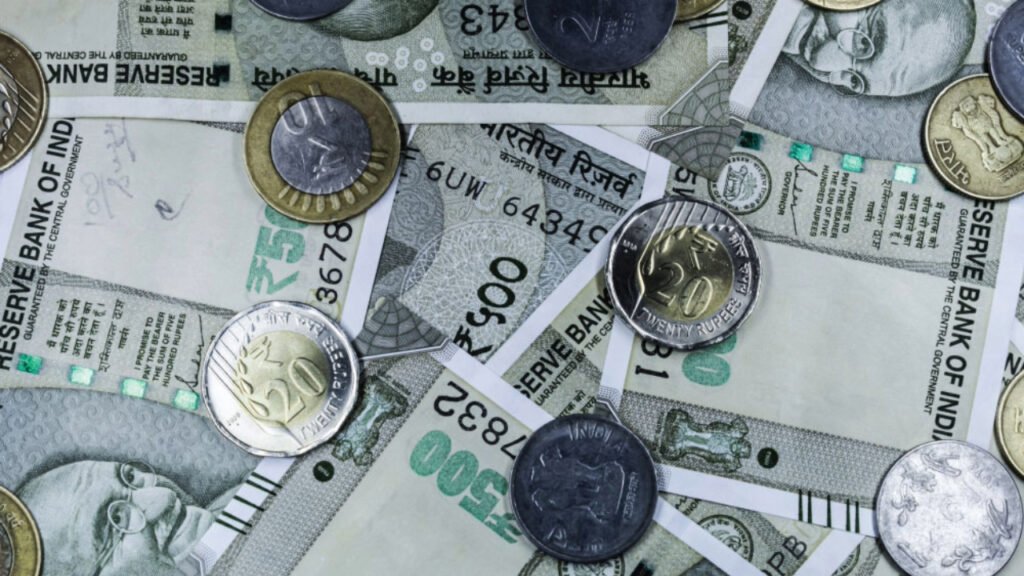
Prime Minister Narendra Modi has dropped a cultural bombshell: for the next year, Indians should skip buying gold jewelry, even for weddings, functions, or festivals. This comes amid the fallout from the Iran conflict, surging oil prices, and pressure on India’s foreign exchange reserves. It’s like asking an Indian mother to stop making extra rotis “just this once.” Gold isn’t just an asset here, it’s woven into our DNA. What Does This Mean? Modi’s appeal is a patriotic call to conserve foreign currency. India imported a record ~$72 billion worth of gold in FY26, up sharply due to high global prices. Almost all of it is imported, draining dollars at a time when expensive crude oil imports are already straining the current account and the rupee. The goal? Reduce non-essential dollar outflows for at least a year. Modi paired this with calls to cut fuel use, work from home more, and skip unnecessary foreign travel. It’s voluntary patriotism, not a ban — but the message is clear: help protect the nation’s reserves during global turbulence. Indians’ Eternal Love for Gold Gold is more than jewelry in India — it’s security, status, tradition, and investment rolled into one. We are the world’s second-largest gold consumer after China. Demand spikes during weddings (10-12 million annually), festivals like Akshaya Tritiya and Dhanteras, and as a hedge against inflation and uncertainty. Families buy it for brides, investments, and rituals. It’s physical wealth you can pass down generations. Convincing 1.4 billion people to pause that habit — even temporarily — is an uphill task. Many analysts expect the impact to be more psychological than total, with demand shifting toward lighter pieces, digital gold, or ETFs rather than vanishing. Immediate Impact on Indian Stocks Markets reacted instantly. Jewelry stocks took a beating on fears of slowed demand: Titan (Tanishq) dropped sharply (around 6-8%) Kalyan Jewellers and Senco Gold fell 9-12% intraday Other players like Sky Gold also slid significantly Investors worried about wedding season sales and potential higher import duties if voluntary compliance falls short. Broader indices were mixed, but the jewelry and retail sectors clearly felt the pinch. Gold-related importers and bullion traders also watched nervously. Will This Shift Global or Indian Gold Prices? Short-term: Gold prices stuttered and wavered after the announcement, as India’s massive demand (a key driver) faces potential softening. Longer-term outlook: Don’t bet against gold rising. Global factors dominate — geopolitical risks, central bank buying, inflation hedges, and USD dynamics. India is a price taker, not maker. Even with reduced local buying, strong international demand (especially from China and investors) supports prices. Domestic prices (already at record highs around ₹1,47,000+/10g levels recently) could see some softening if imports drop 30-40%, but analysts see the uptrend intact due to broader macro forces. Gold remains a strong hedge. If anything, Modi’s call highlights why it’s valuable — and why conserving forex matters when buying it costs so much in dollars. The Bigger Picture for Investors This isn’t the end of India’s gold story — it’s a temporary patriotic pause during energy and geopolitical stress. Smart investors might look at: Diversified exposure (gold ETFs, sovereign gold bonds — which don’t involve physical imports) Opportunities in jewelry stocks if they oversell (long-term demand resilience is high) Broader rupee defense and economic resilience plays At BlackBull, we believe in understanding these cultural + macro intersections. Gold’s shine isn’t fading — but timing and form (physical vs. financial) matter more than ever. What are your thoughts? Will Indians heed the call, or will “just one more necklace” win out? Drop your views below — let’s discuss how this plays out for markets, savings, and sentiment. Anish at BlackBull #Gold #IndiaEconomy #Modi #Investing #Forex #JewelryStocks
What are Perps? Explained by a 5-year old who likes cars!

🚀 Ever wondered how traders bet on Bitcoin or gold prices going up or down… forever? Let me explain Perpetual Futures (and how everyday brokers make it easy) in simple terms. Imagine you’re 5 years old and you have a magic toy car. You don’t actually own the real car. Instead, you play a game guessing whether its price will go up or down. With perpetual futures (also called “perps”), you can keep playing that game as long as you want, there’s no “game over” date. You put down a little of your own money (margin) to control a much bigger position thanks to leverage. If you guess right, you win money. If you’re wrong, you can lose fast. To keep the game fair and the guessed price close to the real toy car’s price, players sometimes share a tiny bit of “candy” (called the funding rate) every few hours, longs pay shorts or vice versa. It’s exciting… but risky, like racing on roller skates. You can win big or fall hard.How CFD Brokers Offer Something Very Similar. Many traditional CFD brokers don’t use the exact crypto-style perpetual futures with funding rates between traders. Instead, they offer perpetual-style CFDs (Contracts for Difference) that work almost the same way :- No expiration date → hold your position for days, weeks, or months. – You speculate on price moves (up or down) without ever owning the real asset (Bitcoin, forex pairs, gold, stocks, etc.). – Leverage lets you control a large position with small capital. – Instead of a peer-to-peer funding rate, the broker usually charges a small daily overnight/swap fee (like a rental cost for the leverage).You’re essentially playing the guessing game directly with the broker as your counterparty. Popular CFD brokers offering these kinds of never-ending contracts on crypto, forex, and more brokers. Key takeaway: True perpetual futures are usually traded on big crypto exchanges (peer-to-peer with funding rates). CFD versions from brokers are simpler, more accessible in many countries, and mirror the spot price directly with daily fees. Both tools let traders get leveraged exposure without owning the asset and without worrying about contract rollover. ⚠️ Important reminder: These are high-risk instruments. Leverage can amplify losses as well as gains, and you can lose more than your initial deposit. Always trade responsibly, use risk management, and only risk what you can afford to lose. What’s your experience with perpetuals or CFDs? Are you using them for crypto, forex, or something else? Drop a comment below, I’d love to hear!
Execution Speed in Modern Trading: Why It Matters More Than Ever

In modern trading, execution speed plays a far more important role than many people realize. While spreads, platforms, and market access often receive most of the attention, the speed at which a trade is executed can directly influence the overall trading experience. In fast-moving markets, even a small delay between placing and filling an order can affect price, increase slippage, and change the outcome of a trade. For both active traders and long-term market participants, execution speed has become one of the key factors that separates an average trading environment from a strong one. The importance of execution speed has grown alongside the development of trading technology. Markets move quickly, news travels instantly, and price action can shift within seconds. In this environment, traders expect their orders to be processed efficiently and reliably. A delay in execution can mean entering at a less favorable price or missing an opportunity altogether. This is especially relevant during periods of high volatility, when price movement is rapid and market conditions can change in an instant. Execution speed also affects trader confidence. A fast and consistent trading environment allows traders to focus more on strategy and decision-making rather than worrying about whether their orders will be filled on time. It helps create a smoother experience and reinforces trust in the broker’s infrastructure. When execution is slow or inconsistent, it can lead to frustration, uncertainty, and questions about the quality of the trading environment. Another reason execution speed matters in modern trading is its connection to slippage. Slippage occurs when the price at which a trade is executed differs from the price expected when the order was placed. While some slippage is a natural part of live market conditions, strong execution infrastructure can help reduce unnecessary delays and improve order handling. For traders, this means a more stable and predictable trading experience, particularly when markets are moving quickly. Technology has raised expectations across the industry. Traders now expect platforms to be fast, stable, and responsive across desktop and mobile devices. They also expect brokerages to invest in infrastructure, liquidity access, and systems that can support efficient trade execution. In today’s market, speed is no longer viewed as a premium feature. It is increasingly seen as a core part of a professional trading environment. For modern brokers, execution speed is also closely tied to credibility. It reflects the quality of the systems operating behind the platform and shows whether a broker is committed to delivering a reliable experience. Traders are more informed than ever, and many now look beyond marketing claims to assess how a broker performs in real trading conditions. This shift has made execution quality a more important part of how brokers build trust and long-term relationships with their clients. In the broader picture, execution speed matters because modern trading is built on timing, efficiency, and confidence. Whether a trader is reacting to market news, managing risk, or entering a position in a fast-moving market, speed can make a meaningful difference. It is not just about being fast for the sake of speed. It is about creating an environment where traders can operate with greater consistency and fewer unnecessary obstacles. As the trading industry continues to evolve, execution speed will remain one of the most important features of a strong brokerage offering. It supports better order handling, improves the trading experience, and helps build trust in a market where reliability matters more than ever. In modern trading, speed is not simply a technical detail. It is a fundamental part of performance.
Partnerships in Financial Services: What Makes Them Strong and Sustainable

Strong partnerships have always played an important role in financial services, but in today’s market, they matter more than ever. As the industry becomes more competitive, more connected, and more technology-driven, successful growth is rarely built in isolation. Whether the relationship is between a broker and a platform provider, a financial brand and an affiliate partner, or a business and its strategic counterpart, the strength of that partnership often depends on more than commercial opportunity alone. Long-term success comes from trust, alignment, consistency, and shared value. One of the most important foundations of a strong partnership in financial services is clarity. Both sides need a clear understanding of expectations, responsibilities, goals, and standards. When communication is open from the beginning, partnerships tend to operate more smoothly and create better outcomes over time. This is especially important in financial services, where reputation, compliance, and client trust carry significant weight. A partnership may begin with commercial potential, but it becomes sustainable only when both sides know how to work together effectively. Trust is another essential factor. In financial services, trust is not built through promises alone. It is built through reliability, professionalism, transparency, and consistent delivery. Partners want to know that the business they are aligned with will communicate clearly, operate responsibly, and protect the integrity of the relationship. This matters because every partnership reflects on both sides. A strong relationship enhances credibility, while a weak one can create risk for brand reputation and long-term growth. Sustainable partnerships are also built on mutual benefit. The strongest relationships are those where both parties see long-term value, not just short-term gain. This could mean access to new markets, stronger distribution, better client experiences, improved technology, or more effective commercial growth. When both sides benefit in a meaningful and balanced way, the relationship becomes more stable and more resilient over time. Partnerships that are too one-sided often struggle to maintain momentum. Technology has also changed what strong partnerships look like in financial services. Today, efficiency, data visibility, reporting, integration, and speed of communication all play a larger role than they did in the past. Businesses want partnerships that are not only strategically aligned but also operationally effective. Better systems and smoother collaboration can strengthen the relationship and help both sides perform more effectively in a demanding market. Another key ingredient is adaptability. Financial services is an industry shaped by market change, regulation, client expectations, and innovation. Strong partnerships are those that can evolve with these changes rather than remain fixed in one model. When both sides are willing to improve, communicate, and adjust where needed, the partnership is more likely to remain valuable over the long term. Flexibility, when combined with clear standards, creates durability. Ultimately, strong and sustainable partnerships in financial services are built on more than commercial agreements. They are built on trust, shared objectives, clear communication, mutual value, and the ability to grow together over time. In a sector where credibility and consistency matter, the best partnerships are those that strengthen not only business performance but also long-term reputation. As financial services continues to evolve, partnerships will remain a major driver of growth and opportunity. The businesses that succeed will be those that treat partnerships not as transactions, but as long-term relationships built with purpose, professionalism, and a shared commitment to quality.
Efficient markets in India?
Credit : Matt Levine, Bloomberg Punjab National Bank, a state-controlled bank in India, “said on Wednesday that it had detected fraudulent transactions worth $1.77 billion at just one of its branches.” (“The Bank has detected some fraudulent and unauthorised transactions (messages) in one of its branch in Mumbai for the benefit of a few select account holders with their apparent connivance,” says the bank’s statement. “Based on these transactions other banks appear to have advanced money to these customers abroad.”) Of course the stock sold off: “Shares of Punjab National Bank closed 10 percent lower on Wednesday on the news of the fraudulent transactions,” and it was down another 12 percent on Thursday. But the fraud represented almost a third of the bank’s market capitalization. Which is more than 10 percent. A $1.77 billion fraud caused only about a $600 million drop in market value the day it was disclosed (and another $664 million the following day). “Most of the fraud was already priced in,” joked Kostya Medvedovsky on Twitter: “The efficient market hypothesis wins again.” Or half-joked I guess. One possibility here is that the $1.77 billion fraud won’t cost the bank $1.77 billion. (“In the Bank these transactions are contingent in nature and liability arising out of these on the Bank shall be decided based on the law and genuineness of underlying transactions,” says the bank’s statement, and it doesn’t appear that it advanced them the money.) But the other possibility is, sure, why not, some of the fraud was already priced in. As of the end of 2017, according to Bloomberg data, Punjab National Bank had assets of about 7.7 trillion rupees, liabilities of about 7.2 trillion rupees, and about 490 billion rupees ($7.7 billion) of shareholders’ equity. It traded at a market capitalization of about 416 billion rupees ($6.5 billion), or about an 85 percent price-to-book ratio. Lazily looking at those numbers, you might note that $7.7 billion (the book equity at the end of 2017) minus $1.8 billion (the amount of the fraud) equals $5.9 billion, and that $6.5 billion (the market cap at the end of 2017) minus $600 million (the first-day market-cap loss on announcement of the fraud) also equals $5.9 billion. It’s almost like the market knew that the bank’s equity was overstated by about $1.2 billion, and when the bank announced that it had been defrauded by $1.8 billion, the market said “oh that is a little more than we thought” and adjusted accordingly. This is a little fanciful but also … probably … correct? There is a lot of precedent for banks’ stocks trading below book value, especially in places and times when people distrust banks. It is a little hard to know what to make of that, but one obvious interpretation is that shareholders don’t believe that the banks’ assets are worth what the banks say they are. We talked the other day about bank opacity, about how not even bank executives seem to understand what is going on inside their banks. If that is the case then it shouldn’t be surprising if sometimes the market thinks the bank is worth less than the bank thinks it’s worth, or if the market turns out to be right. It’s not literally that the market knew about the $1.77 billion fraud before the bank did. It’s just that the whole enterprise is kind of a random-number generator, and the market did a better job of guessing the right random number than the accountants did.
New Beginnings

At 26,000 square miles the UAE is smaller than Ireland and has experienced unprecedented growth in the 20th century. Today’s UAE is rich with culture, prosperity and architecture that embraces the golden white sands and blue seas. However, one must not forget the vision of the Sheikhdoms to walk on water and build an eternal wealth for not only Emirate citizens but for all mankind to share.
Is 2017 the year of the Gold shelter?

2017 the year of the Gold shelter? The year has already been trending with Politicians aiming to bash Central Banks and as this critique grows, investors could be looking to seek haven in Gold, especially a reasoning behind the spur above $1,200 per oz yesterday. Could this year be the turning point of the bear? Investors are banking on the demand for Gold rising as political intervention could cause central banks to miss growth targets. Jim Rickards, author of the famous Currency Wars remains even more bullish on Gold as he expects a 10%+ rise in the first quarter of 2017. For those who lose faith in central banks, gold may be the last holdout. It retains its appeal as an asset that once underwrote the monetary system and it can’t be created at will like currencies and bonds, said Matthew Turner, a Macquarie Group Ltd. economist. Gold used to be the centre of the global financial system, for that reason it has a reputation as a currency, however people are confused as to how Trump’s policies will actually impact the Precious metal markets. Since his election, money managers have been pulling money out of SPDR Gold Shares, the world’s largest gold-backed exchange-traded fund, as they seek bigger returns in stocks. At the same time, retail investors have been flooding into the iShares Gold Trust. Gold has risen 6.7 percent since hitting a 10-month low on Dec. 15 and was at $1,197.67 an ounce Friday. The trend for Gold buying looks pretty safe for the long-term.