
Innovation, Technology, and the Future of the Global Trading Landscape
The financial markets industry is experiencing one of the most significant transformations in its history. Advances in technology, artificial intelligence, automation, and data analytics are changing how brokers, traders, and financial institutions operate. Leading businesses today must embrace innovation while maintaining strong operational foundations. Technology provides new opportunities to improve efficiency, enhance customer experience, and create smarter business models, but successful implementation requires strategic thinking and a clear understanding of market requirements. Throughout my work within the trading industry, innovation has remained a key focus. Developing better solutions requires continuous evaluation of existing processes, understanding client expectations, and identifying areas where technology can create meaningful improvements. The evolution of trading platforms, liquidity solutions, payment infrastructure, and analytical tools has created new opportunities for businesses to expand globally. However, technology alone does not guarantee success. Companies must combine innovation with strong execution, regulatory awareness, and customer-focused strategies. The future of financial markets will be shaped by organizations that can successfully balance technology and human expertise. Artificial intelligence and automation will continue to transform operations, but strategic decision-making, relationship management, and industry knowledge will remain critical. The next generation of successful trading companies will not simply compete on products or pricing. They will compete on experience, innovation, reliability, and their ability to adapt quickly to a changing global environment.
Building Global Partnerships and Expanding Opportunities Across Financial Markets

In the financial markets industry, success is rarely achieved through individual efforts. Sustainable growth is built through strong partnerships, strategic collaboration, and the ability to create networks that support long-term business objectives. During my experience in the global trading sector, one of the key areas of focus has been developing relationships with partners across different regions and creating opportunities that contribute to business expansion. From liquidity relationships and technology partnerships to affiliate networks and institutional collaborations, every connection plays an important role in building a stronger market presence. The trading industry operates within a highly competitive environment where companies must constantly differentiate themselves. Competitive pricing, reliable execution, advanced technology, and strong customer experience are essential, but the ability to create meaningful partnerships often becomes the deciding factor in long-term success. Expanding into international markets requires a detailed understanding of regional differences, trader behavior, regulatory environments, and business expectations. What works in one market may not necessarily work in another. Successful expansion requires local knowledge, strategic planning, and the ability to adapt solutions according to market requirements. One of the biggest lessons from working in global financial markets is that relationships remain one of the most valuable assets a company can build. Technology can improve efficiency, but trust creates lasting partnerships. The strongest organizations are those that invest in relationships while continuing to innovate. As the industry continues to evolve, businesses must look beyond short-term growth and focus on creating sustainable ecosystems. Strong partnerships, operational excellence, and a commitment to continuous improvement provide the foundation for long-term success in global financial markets.
Driving Business Development and Strategic Growth in the Global Trading Industry

The global trading industry has transformed significantly over the past decade, with businesses facing increasing competition, changing client expectations, technological disruption, and evolving market structures. Growth in this environment requires more than traditional sales strategies; it requires a deep understanding of market dynamics, strategic partnerships, operational excellence, and the ability to identify opportunities before they become mainstream. Throughout my career in the financial markets industry, my focus has been centered around building sustainable growth strategies, developing strong business relationships, and creating operational frameworks that support long-term expansion. Business development in the trading sector is not simply about acquiring new clients; it is about understanding market needs, creating meaningful partnerships, and delivering solutions that create value for all stakeholders. A major part of driving growth involves identifying the right opportunities in a highly competitive landscape. The FX and CFD industry continues to evolve with new technologies, changing regulations, increasing competition, and shifting trader behavior. Successful organizations must continuously adapt their strategies, improve their offerings, and build stronger connections with clients, partners, and global networks. Strategic partnerships have always played an important role in expanding market presence. Working closely with liquidity providers, technology providers, affiliates, institutional partners, and industry stakeholders creates opportunities that go beyond traditional business models. The strongest relationships are built through trust, transparency, and a shared vision for long-term success. The future of the trading industry will belong to companies that combine innovation with strong fundamentals. Technology, automation, artificial intelligence, and data-driven decision-making are reshaping how businesses operate, but relationships and market understanding remain equally important. Building sustainable growth requires a balance between innovation, operational discipline, and customer-focused strategies. By combining industry experience with a forward-looking approach, businesses can create stronger foundations for expansion and maintain competitiveness in an increasingly global marketplace.
Head of FX & Metals
As Head of FX & Metals, I was responsible for leading the strategic direction, operational management, and continuous improvement of the company’s trading environment during a critical stage of expansion. This role involved overseeing the complete trading lifecycle, from product development and liquidity management to execution performance and operational efficiency. With financial markets becoming increasingly competitive and client expectations evolving rapidly, the focus was on building a scalable infrastructure that could deliver consistent execution quality, competitive trading conditions, and a reliable experience for traders across global markets. During this growth phase, I played an instrumental role in shaping the company’s FX and Metals product strategy, identifying opportunities to enhance the product offering while maintaining strong operational controls. This included evaluating market trends, analyzing client trading behavior, improving instrument availability, and ensuring that trading solutions remained aligned with industry developments. By combining market insights with a strong understanding of client requirements, I helped develop products and services designed to support both short-term performance and long-term business growth. A major area of focus was improving execution quality and strengthening the overall trading ecosystem. I worked closely with liquidity providers, technology teams, risk departments, and internal stakeholders to optimize pricing structures, enhance trade execution processes, and minimize operational challenges. Through continuous monitoring and refinement of execution workflows, the objective was to create a more efficient and transparent trading environment while maintaining the highest standards of reliability, speed, and consistency. Beyond operational responsibilities, I contributed to building frameworks that supported sustainable expansion and positioned the business for future opportunities. This involved implementing structured processes, improving internal collaboration, developing performance-focused strategies, and ensuring that trading operations could scale effectively as volumes and market participation increased. By balancing commercial objectives with risk management principles, I helped establish a stronger foundation for continued growth within the highly competitive FX and Metals sector. The role also required a forward-looking approach to industry changes, including advancements in trading technology, shifting regulatory expectations, evolving liquidity models, and changing client preferences. By staying connected with market developments and proactively adapting operational strategies, I helped ensure the business remained agile and competitive. The experience gained during this period created a foundation for future expansion, strengthening the company’s ability to deliver high-quality trading solutions while building lasting value for clients, partners, and stakeholders.
Broker expos in 2026: the booth is still expensive. The question is what you are actually buying?

I can still remember 2013. Atom8, a Forex broker expo in London. The first person who walked onto our stand became one of the most significant client relationships we had at the time. He introduced himself as the biggest spread betting client with IG Index at the time and he wasn’t wrong. Over the years, the expos have been subject to trends: leverage, more CFD products, the battle for the highest CPA payouts, payment solutions, crypto providers, trading educators, DeFi Markets and now AI Solutions. That story is why a generation of this industry still treats the trade show calendar as a client-acquisition plan. In 2026 I think that is the wrong frame of mind. I do not think that walk-up happens anymore and not in the way it did when the hall was smaller, the product set was simpler, and a serious account could still be opened because of the connection the person made at the booth. Then there are the costs to be aware of. A mid-size custom booth in Dubai, floor space plus build can easily run to USD 40,000–80,000 before anyone books a flight. A flagship island or double-deck sits in the USD 150,000–200,000 range and climbs from there once lighting, LED, freight and venue technical fees land. Add four staff for a week of hotels at event rates, transfers, and hosting dinners andthe costs rise further. Entertainment is the line finance always underestimates and operations always overruns. That is the cost of showing up. The value you get back can vary depending on which hall you are in, and who finds their way to your booth. Cyprus and Dubai still carry the most B2B weight. iFX in Limassol and the Dubai circuit, iFX at DWTC, Forex Expo across Halls 1–5 are where liquidity, payments, platform vendors and senior partnership conversations actually close. Meetings get booked. Contracts get finished in the lobby after the hall shuts. If you are a broker from little ol’ New Zealand, these weeks are one of the few times in the year you can put a face to the operators, IBs and counterparties you otherwise only see on a screen. Dubai is also theatre. Biggest booth. Loudest sponsorship. A footballer on the stand, an influencer in the aisle, 240-plus exhibitors doing a version of the same thing. Forex Expo talks in tens of thousands of attendees. A large share of that traffic is real. And let’s be honest, plenty are there for the tote bag, the raffle and the photo. If your KPI is funded accounts from the badge scan, you will leave disappointed. If your KPI is brand presence and partner face-time, the spend is still worth it LATAM runs differently. Money Expo and the local FX Expo circuit in Mexico, Colombia and the rest of the route pull retail energy and education groups. Academies, first-time traders, classrooms that want a broker on stage. Useful for brand and for relationships with educators. Weak if you treat every scan as a lead. Asia is IB country. Dense affiliate and introducing-broker communities, all hunting the best rebate or trying to build outlets for wealthy Chinese communities through entities in Hong Kong, Singapore, Cambodia or Thailand – all great stories go untold. That pressure is how the industry ends up with CPA headlines, leverage as a marketing line and bonus structures that look clever on a banner and ugly in a compliance review. You can buy volume that way. You rarely buy the book you want to keep. Saying this, I will be attending the Hong Kong iFX Expo and speaking about sports sponsorships in the industry – stay tuned! In general, booth pricing looks tight. The supply is not. Organisers will tell you the floor is sold. Early-bird decks, rising per-square-metre rates, limited islands, premium corners gone by Christmas. They control the list price because they control the map. The economics underneath are softer than the brochure. More venues can take a show, and a hall can create supply faster than most brokers assume an extra row of shells, a last bay opened, a sponsor package unbundled into three smaller stands. When demand is concentrated in the same two weeks in Dubai or Limassol, the headline rate holds. When a block of space is still empty three weeks out, the same organiser who would not take a call in January will take one. That is why last-minute inventory can sometimes tells you more about the real value of the space than the original rate card. You will not get the best location but you can still get a decent deal: a leftover shell, a cancelled island, a sponsorship that the organiser would rather move than leave empty.. Teams that book twelve months out pay for certainty and the photo of the stand. Teams that can live with a worse pitch and a tighter build window can sometimes get much closer to what the space is actually worth. None of that changes the all-in number by enough to turn a bad show into a good one. It just means the “sold out, take it or leave it” line is not always the end of the conversation. The partners who used to live only online are now on the stand. The other change on the 2026 floor is who is working the booths. Traditional online CPA partners (as mentioned in the previous article) comparison sites, review publishers, media affiliates who built a decade of business on Google rankings and last-click tracking are more visible at expos than they were five years ago. That is not a branding whim. It is a survival response. AI search has broken the old funnel. Zero-click behaviour is now the default on a large share of queries. AI Overviews and answer engines summarise “best broker” content on the results page. The user reads the answer, types the broker URL directly, and the affiliate who wrote the page never gets the click. Organic session share has been falling; AI-referred
BlackBull CBDO: AI is killing the FX/CFD broker CPA model
This is a guest post by Anish Lal. Anish has been active in the trading industry for over a decade and is Chief Business Development Officer at BlackBull, a New Zealand-based brokerage business For years, the broker industry ran on a simple acquisition formula for media related deals: review sites ranked you, affiliates sent you traffic, and you paid CPA when a client funded. It could get messy, expensive, and occasionally theatrical, but systems like CellExpert, which is widely used, helped to track RoI and the job of a partnership officer (or affiliate manager) is to monitor this. That model is now being rewritten, and not by another marketing platform. It is being rewritten by AI. Traders used to start with Google, bounce through a handful of comparison pages, scan Trustpilot, then maybe click an affiliate link. Today a growing number of them just ask ChatGPT, Gemini or Perplexity: who should I trade with? Those engines have been trained on decades of industry content, review sites, forums, regulator notices, Trustpilot scores, YouTube rants, forum comments from years ago…and more. The first shortlist a trader sees is no longer a paid placement. It is a synthesis. We are already seeing the commercial consequences. At BlackBull we have recorded around a 30% increase in leads from ChatGPT and other AI search tags, with the lift most visible in APAC and the EU. That is not a vanity channel. It is showing up in the CRM with UTM source chatgpt.com and similar AI tags attached. Review sites are changing the deal The review sites know this. Many are moving away from pure CPA and asking for fixed monthly placement fees instead. From their side, the logic is obvious: if they cannot reliably control the click, they would rather lock in a retainer than wait for a conversion that may now happen inside an AI answer box. Those fees are also becoming more competitive. As AI engines get better at weighing regulation, execution reputation and review quality, the value of a generic “top 10 brokers” page declines. A site without real readership or loyalty will struggle to justify the old performance model. The legacy brands with traffic, trust and a recognisable name can still command a higher placement fee. Everyone else is negotiating from a weaker position. That does not mean review sites disappear. It means the middle of the market gets thinner. If you do not have readership or loyalty, you lose direct traffic and clicks. AI has already eaten a slice of the discovery journey those sites used to own. Affiliates, IBs and the squeeze. Brokers have tried to route around this by pushing affiliate relationships into the IB space, which revolves around turning introducers into longer-term revenue partners rather than one-off CPA deals. That can work. An IB with a real book and a real relationship is harder for an AI chatbot to replace than a review page with a cookie. But it is not a complete answer. IBs still compete with the same AI-shaped first impression. If the model has already told a trader three brokers it considers reliable, the introducer is arriving later in the funnel. CPA is not dead. It is just no longer the default. Performance deals will survive where the partner can prove incremental value for unique audiences, high-intent communities, or conversion that AI cannot replicate. Fixed placements will survive where the brand still moves the needle. Everything in between is under pressure. What this means for traders (and us) For traders, this is mostly good news. More of the decision is being informed by accumulated public records rather than whoever paid the most that month. The catch, of course, is that AI is only as good as the content it was fed. Garbage in still produces a confident-sounding shortlist. For brokers, the implication is uncomfortable and useful at the same time. You cannot buy your way to the top of an AI answer the way you once bought a review-site slot. Reputation, regulation, reviews and years of content now compound in a new distribution layer. The firms that treated Trustpilot, service quality and public track record as afterthoughts will feel that first. We are not predicting the end of affiliates. We are saying the old CPA-only stack is losing its monopoly on discovery. AI did not invent broker selection. It just compressed twenty years of industry content into a single conversation and a growing number of traders in APAC and Europe are starting there. This being said, I write this on my lunch break reviewing our quarter spend on brand partners and the costs have increased. However, so has RoI.
Inside BlackBull Markets: Forex Brokerage, A/B Book Models, Liquidity and Trading Costs

Forex trading is built around understanding price movement, market behaviour and the factors that influence currencies. While modern trading platforms provide traders with an enormous amount of information, charts and analytical tools, having access to more data does not automatically lead to better trading decisions. A successful approach begins with understanding what the market is communicating. Price charts allow traders to observe trends, momentum, volatility and areas where buyers and sellers have previously reacted. This information can help create a structured framework for evaluating potential opportunities rather than making decisions based purely on emotion. Technical analysis is commonly used to study historical price behaviour. Traders may examine trends, support and resistance levels, chart patterns and momentum to understand how a market is behaving. The objective is not to predict every movement perfectly, but to identify situations where the probability of a particular outcome may be more favourable. Fundamental analysis provides another perspective. Currency markets can react strongly to interest-rate decisions, inflation, employment figures, economic growth and statements from central banks. These factors can influence expectations about an economy and consequently affect the value of its currency. Many traders combine technical and fundamental analysis rather than relying entirely on one method. Fundamental information can provide broader market context, while technical analysis may help traders identify potential entry and exit areas. However, analysis alone is not enough. Risk management remains one of the most important components of any trading strategy. No matter how convincing a market setup appears, there is always a possibility that the trade will move in the opposite direction. Professional trading therefore requires traders to consider potential losses before focusing on potential profits. Position sizing can help control this exposure. Taking excessive risk on a single trade can create significant pressure on an account and may also influence emotional decision-making. A structured approach aims to keep individual outcomes within manageable limits. Market volatility also needs to be considered. Forex markets can become significantly more active during major economic announcements, central-bank decisions and unexpected geopolitical developments. During these periods, prices may move rapidly and normal trading conditions can change. Traders should therefore understand that market behaviour is not constant. A strategy that performs effectively during a stable trending environment may behave differently when markets become highly volatile or move within a narrow range. This makes adaptability important, but traders should avoid changing their entire strategy after every unsuccessful trade. Losses are a normal part of financial markets and do not automatically mean that a trading method has failed. A more useful approach is to evaluate performance across a meaningful number of trades. Maintaining a trading journal can help identify which setups are performing well, where mistakes are occurring and whether trading rules are being followed consistently. Psychology is another major factor. Fear, greed, frustration and overconfidence can all influence trading decisions. Even a technically strong strategy can become ineffective when a trader repeatedly ignores its rules. Patience can therefore be as important as market knowledge. Traders do not need to participate in every price movement. Waiting for conditions that match a predefined strategy can help reduce unnecessary trades and emotional decisions. Technology has made forex markets easier to access than ever before. Traders can monitor charts, analyse markets and execute orders almost instantly from desktop and mobile platforms. Yet technology should remain a tool rather than a replacement for judgement. More indicators, charts or automated signals do not necessarily create a better strategy. In many cases, a clear and understandable process can be more valuable than an unnecessarily complicated trading system. The objective should be consistency. Traders should understand why they are entering a position, where the idea becomes invalid, how much capital they are risking and under what conditions they intend to exit. This creates a repeatable process that can be reviewed and improved over time. Ultimately, successful forex trading is not about predicting every market movement. Financial markets contain uncertainty, and no analytical method can eliminate that uncertainty completely. A professional trading approach combines market analysis with disciplined risk management, realistic expectations and continuous evaluation. Traders who understand the market environment, control their exposure and remain consistent with their strategy are better positioned to navigate changing market conditions. Charts can provide valuable information, but the real advantage comes from how that information is interpreted and converted into disciplined decisions. Building that process takes time, experience and continuous learning, making trading development an ongoing journey rather than the search for a perfect indicator or guaranteed strategy.
Understanding Forex Market Analysis: Building a Smarter Trading Approach
Forex trading is built around understanding price movement, market behaviour and the factors that influence currencies. While modern trading platforms provide traders with an enormous amount of information, charts and analytical tools, having access to more data does not automatically lead to better trading decisions. A successful approach begins with understanding what the market is communicating. Price charts allow traders to observe trends, momentum, volatility and areas where buyers and sellers have previously reacted. This information can help create a structured framework for evaluating potential opportunities rather than making decisions based purely on emotion. Technical analysis is commonly used to study historical price behaviour. Traders may examine trends, support and resistance levels, chart patterns and momentum to understand how a market is behaving. The objective is not to predict every movement perfectly, but to identify situations where the probability of a particular outcome may be more favourable. Fundamental analysis provides another perspective. Currency markets can react strongly to interest-rate decisions, inflation, employment figures, economic growth and statements from central banks. These factors can influence expectations about an economy and consequently affect the value of its currency. Many traders combine technical and fundamental analysis rather than relying entirely on one method. Fundamental information can provide broader market context, while technical analysis may help traders identify potential entry and exit areas. However, analysis alone is not enough. Risk management remains one of the most important components of any trading strategy. No matter how convincing a market setup appears, there is always a possibility that the trade will move in the opposite direction. Professional trading therefore requires traders to consider potential losses before focusing on potential profits. Position sizing can help control this exposure. Taking excessive risk on a single trade can create significant pressure on an account and may also influence emotional decision-making. A structured approach aims to keep individual outcomes within manageable limits. Market volatility also needs to be considered. Forex markets can become significantly more active during major economic announcements, central-bank decisions and unexpected geopolitical developments. During these periods, prices may move rapidly and normal trading conditions can change. Traders should therefore understand that market behaviour is not constant. A strategy that performs effectively during a stable trending environment may behave differently when markets become highly volatile or move within a narrow range. This makes adaptability important, but traders should avoid changing their entire strategy after every unsuccessful trade. Losses are a normal part of financial markets and do not automatically mean that a trading method has failed. A more useful approach is to evaluate performance across a meaningful number of trades. Maintaining a trading journal can help identify which setups are performing well, where mistakes are occurring and whether trading rules are being followed consistently. Psychology is another major factor. Fear, greed, frustration and overconfidence can all influence trading decisions. Even a technically strong strategy can become ineffective when a trader repeatedly ignores its rules. Patience can therefore be as important as market knowledge. Traders do not need to participate in every price movement. Waiting for conditions that match a predefined strategy can help reduce unnecessary trades and emotional decisions. Technology has made forex markets easier to access than ever before. Traders can monitor charts, analyse markets and execute orders almost instantly from desktop and mobile platforms. Yet technology should remain a tool rather than a replacement for judgement. More indicators, charts or automated signals do not necessarily create a better strategy. In many cases, a clear and understandable process can be more valuable than an unnecessarily complicated trading system. The objective should be consistency. Traders should understand why they are entering a position, where the idea becomes invalid, how much capital they are risking and under what conditions they intend to exit. This creates a repeatable process that can be reviewed and improved over time. Ultimately, successful forex trading is not about predicting every market movement. Financial markets contain uncertainty, and no analytical method can eliminate that uncertainty completely. A professional trading approach combines market analysis with disciplined risk management, realistic expectations and continuous evaluation. Traders who understand the market environment, control their exposure and remain consistent with their strategy are better positioned to navigate changing market conditions. Charts can provide valuable information, but the real advantage comes from how that information is interpreted and converted into disciplined decisions. Building that process takes time, experience and continuous learning, making trading development an ongoing journey rather than the search for a perfect indicator or guaranteed strategy.
Anish Lal on Global Markets, Trading and the Evolution of Forex Brokerage
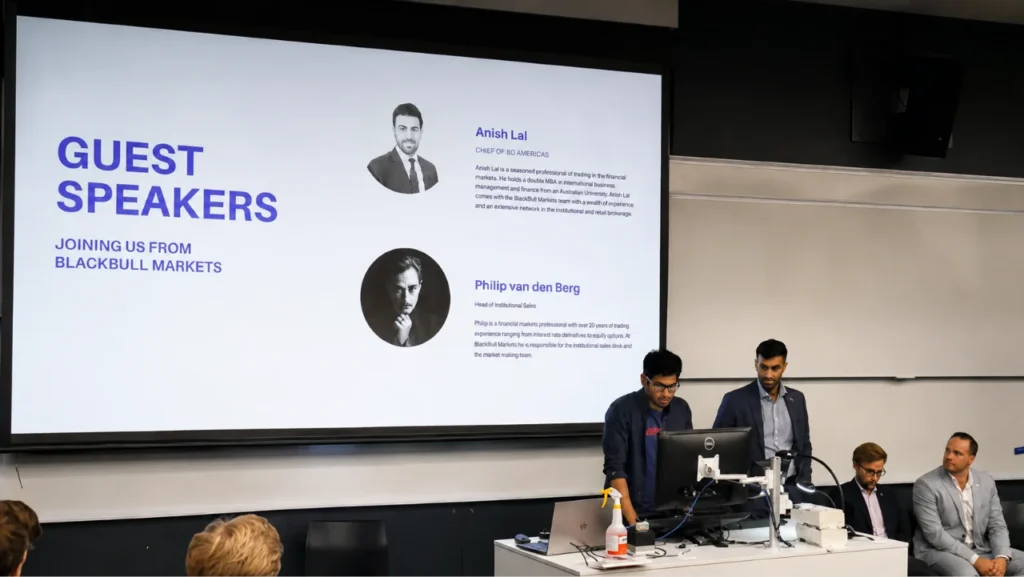
The forex trading industry continues to evolve as brokers, liquidity providers and traders respond to changing market conditions, rising operational costs and increasing geopolitical uncertainty. For traders, understanding what happens behind the trading platform can be just as important as understanding the market itself. In this discussion, Anish Lal explores broker fees, liquidity and the way relationships with liquidity providers are changing. These areas directly influence the trading environment because brokers rely on liquidity infrastructure to provide pricing and facilitate client orders across global financial markets. Liquidity is one of the foundations of efficient trading. Strong liquidity can help create a more stable environment where traders have access to competitive pricing and efficient order execution. However, liquidity conditions are not constant. They can change significantly during major economic announcements, unexpected geopolitical developments or periods of unusually high volatility. When uncertainty increases, liquidity providers may adjust their exposure and risk management. This can affect the depth of available liquidity and potentially contribute to wider spreads or changes in execution conditions. Traders who only focus on the price shown on their platform may not always see the complex infrastructure operating behind that price. Broker fees are another important part of the conversation. Trading costs can include spreads, commissions and other charges depending on the account structure and products being traded. While traders naturally look for competitive costs, the cheapest headline price does not necessarily represent the complete trading experience. Execution quality, platform reliability, liquidity access and the consistency of pricing can all matter alongside the visible cost of placing a trade. This is particularly relevant for active traders whose strategies involve a large number of transactions, where relatively small differences in trading costs can accumulate over time. The relationship between brokers and liquidity providers therefore plays an important role in the overall trading ecosystem. Brokers need access to reliable counterparties while also managing their own operational and commercial requirements. At the same time, liquidity providers continuously evaluate market risk and the environments in which they are willing to provide pricing. Geopolitical risk has made this relationship increasingly important. Global conflicts, political uncertainty, changes in international relationships and unexpected events can rapidly influence financial markets. Currency pairs, commodities, indices and other instruments may experience sharp movements when investors react to new information. During these periods, market conditions can behave differently from what traders experience during normal sessions. Liquidity can become less predictable, spreads may change and prices can move rapidly. Understanding this possibility is an important part of realistic risk management. Technology has made financial markets faster and more accessible, but it has not removed the underlying risks associated with market participation. Traders can execute orders within seconds, yet the quality and conditions surrounding that execution still depend on market liquidity and the infrastructure connecting brokers to the wider financial system. For this reason, choosing a broker should involve more than comparing promotional offers or looking at a single advertised spread. Traders may also want to understand the broker’s execution model, trading conditions, technology and approach to providing market access. Transparency becomes particularly valuable in this environment. When traders understand how costs, liquidity and execution work, they are better positioned to evaluate whether a trading environment is suitable for their strategy. Different strategies can also have different requirements. A trader holding positions for several days may view transaction costs differently from a short-term trader entering and exiting the market frequently. Similarly, strategies operating during volatile market periods may be more sensitive to changes in liquidity and execution. The broader lesson is that forex trading does not take place in isolation. Every trade exists within a global network involving traders, brokers, technology providers, liquidity providers and financial institutions. As geopolitical uncertainty and market structure continue to evolve, understanding this infrastructure becomes increasingly relevant. Traders cannot control global events or the availability of liquidity, but they can understand the environment in which they are operating and manage their exposure accordingly. The discussion around broker fees and liquidity ultimately highlights the importance of looking beyond the trading screen. Competitive pricing matters, but so do execution quality, liquidity relationships, risk management and the ability of a broker’s infrastructure to operate effectively during changing market conditions. For traders, developing this broader understanding can contribute to more informed decisions when evaluating brokers and managing trading risk in an increasingly complex global market.
Broker Fees, Liquidity and Geopolitical Risk: How the Forex Industry Is Changing

The MoneyHub Wealth Summit 2026 brought together investors, business owners, financial professionals and industry leaders in Queenstown, New Zealand, for three days of discussion around investing, wealth creation, property, financial markets and the future of business. Held from 18 to 20 June 2026, the summit was designed to give attendees practical perspectives on how wealth is being built, managed and invested in a changing economic environment. Rather than focusing on a single asset class, the programme explored a broad range of opportunities and challenges facing investors. One of the important themes of the summit was investing beyond traditional property. Property has historically played a major role in wealth creation for New Zealand investors, but today’s financial landscape provides access to a much wider range of markets, instruments and investment strategies. Global financial markets have become increasingly accessible to individual investors. Technology has made it possible for people to follow international markets, research investment opportunities and access financial products from almost anywhere. This increased accessibility has created significant opportunities, but it has also made financial education, risk awareness and disciplined decision-making more important. The MoneyHub Wealth Summit provided a setting where experienced professionals from different parts of the financial industry could discuss these issues directly with investors and business owners. The investing-focused programme included perspectives from professionals representing trading platforms, managed investments and global brokerage services. This created an opportunity to examine investing from several different angles rather than presenting one approach as suitable for everyone. Anish Lal, Chief Business Development Officer at BlackBull Markets, participated in the summit’s Investing Beyond Property programme. His involvement brought a global brokerage perspective to the discussion, particularly relevant to investors interested in financial markets, trading and access to international investment opportunities. The role of a modern brokerage has changed considerably as financial technology has developed. Brokers are no longer simply providing a mechanism for placing trades. Traders increasingly evaluate the complete environment surrounding their market access. Technology, available instruments, execution, platform functionality, research capabilities, customer service and the overall reliability of the trading environment can all influence the experience. For investors exploring international markets, understanding this infrastructure is important. Access to more markets does not automatically produce better investment outcomes. Investors still need to understand what they are investing in, why they are taking a particular position and how much risk they are prepared to accept. This distinction between access and decision-making is particularly important in modern markets. Technology can make entering a position extremely easy, but it cannot replace investment discipline. Whether someone is investing for long-term wealth creation or participating more actively in financial markets, a structured approach remains essential. Market volatility is another important consideration. Financial markets can move rapidly in response to economic data, central bank decisions, geopolitical developments, corporate results and changes in investor sentiment. These movements can create opportunities, but they can also expose investors to significant risk. Successful participation therefore requires an understanding that potential return and potential risk are connected. This is particularly relevant in leveraged markets, where price movements can have a larger impact on an investor’s capital. Risk management should consequently be treated as a fundamental part of the investment process rather than something considered only after a position has been opened. Position size, diversification, investment horizon and overall portfolio exposure are all important considerations. Another major theme surrounding modern wealth creation is diversification. Investors increasingly have access to equities, foreign exchange, commodities, indices, funds and other financial instruments across international markets. Having access to different asset classes can provide additional opportunities, but diversification should still be based on a clear understanding of the investor’s objectives and risk tolerance. Simply holding more investments does not necessarily create a stronger portfolio. The relationship between short-term trading and long-term investing is also worth understanding. Both approaches involve financial markets, but their objectives, time horizons and risk-management requirements can be very different. A long-term investor may focus on fundamentals, diversification and compounding over many years. An active trader may pay greater attention to shorter-term price movements, market structure, volatility and specific entry and exit decisions. Neither approach eliminates risk. What matters is whether the strategy is appropriate for the individual’s financial objectives, knowledge and circumstances. Events such as the MoneyHub Wealth Summit are valuable because they allow these different perspectives to exist within the same conversation. Investors can hear from professionals with different areas of expertise and compare those perspectives against their own financial goals. The summit also highlighted the growing importance of financial education. Modern investors have access to an extraordinary amount of information, but more information does not always lead to better decisions. Financial news, social media, market commentary and online communities can expose investors to new ideas almost continuously. The challenge is determining which information is relevant and how it should influence an investment decision. Independent thinking therefore remains an important skill. Investors need to distinguish between understanding an opportunity and simply following market excitement. Periods of strong performance can attract significant attention to particular markets or assets, while periods of volatility can produce fear and emotional decision-making. A disciplined investment process helps reduce the influence of both extremes. The same principle applies to trading. Successful trading is rarely about predicting every market movement correctly. It is more often about developing a repeatable process, managing risk and maintaining discipline across a large number of decisions. Losses are an unavoidable part of financial markets. The objective is not to create a strategy where losses never occur, but to ensure that individual losses do not undermine the overall investment or trading approach. This is one reason professional market participants often focus heavily on risk before considering potential return. The future of investing is also closely connected to technology. Trading platforms, mobile applications, financial data and digital onboarding have significantly changed how individuals interact with markets. Investors can now monitor international markets and manage portfolios using technology that would once have been available primarily to professional market participants. This democratisation of market access is significant. However,