Credit : Matt Levine, Bloomberg
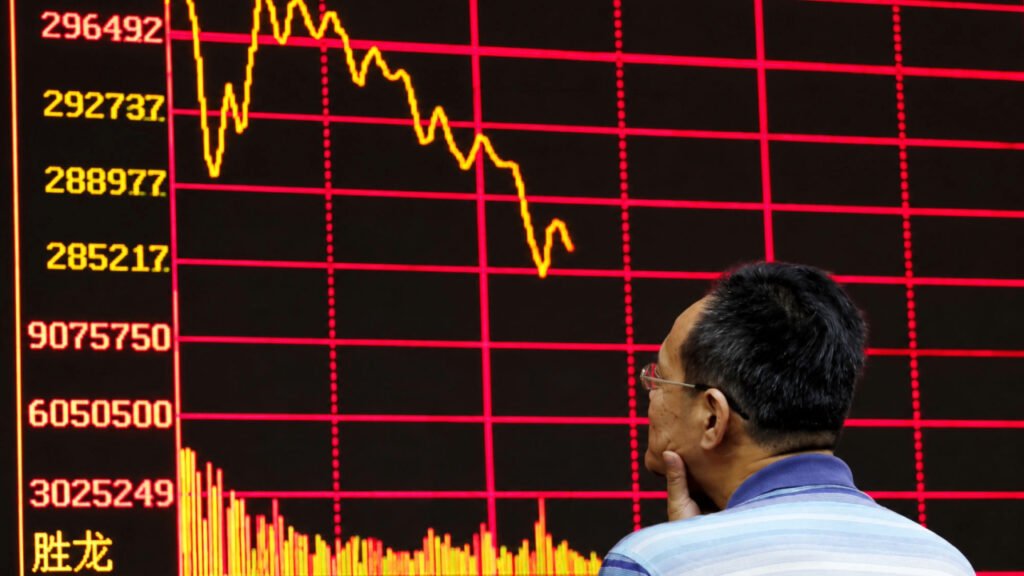
Punjab National Bank, a state-controlled bank in India, “said on Wednesday that it had detected fraudulent transactions worth $1.77 billion at just one of its branches.” (“The Bank has detected some fraudulent and unauthorised transactions (messages) in one of its branch in Mumbai for the benefit of a few select account holders with their apparent connivance,” says the bank’s statement. “Based on these transactions other banks appear to have advanced money to these customers abroad.”) Of course the stock sold off: “Shares of Punjab National Bank closed 10 percent lower on Wednesday on the news of the fraudulent transactions,” and it was down another 12 percent on Thursday.
But the fraud represented almost a third of the bank’s market capitalization. Which is more than 10 percent. A $1.77 billion fraud caused only about a $600 million drop in market value the day it was disclosed (and another $664 million the following day). “Most of the fraud was already priced in,” joked Kostya Medvedovsky on Twitter: “The efficient market hypothesis wins again.” Or half-joked I guess. One possibility here is that the $1.77 billion fraud won’t cost the bank $1.77 billion. (“In the Bank these transactions are contingent in nature and liability arising out of these on the Bank shall be decided based on the law and genuineness of underlying transactions,” says the bank’s statement, and it doesn’t appear that it advanced them the money.)
But the other possibility is, sure, why not, some of the fraud was already priced in. As of the end of 2017, according to Bloomberg data, Punjab National Bank had assets of about 7.7 trillion rupees, liabilities of about 7.2 trillion rupees, and about 490 billion rupees ($7.7 billion) of shareholders’ equity. It traded at a market capitalization of about 416 billion rupees ($6.5 billion), or about an 85 percent price-to-book ratio. Lazily looking at those numbers, you might note that $7.7 billion (the book equity at the end of 2017) minus $1.8 billion (the amount of the fraud) equals $5.9 billion, and that $6.5 billion (the market cap at the end of 2017) minus $600 million (the first-day market-cap loss on announcement of the fraud) also equals $5.9 billion. It’s almost like the market knew that the bank’s equity was overstated by about $1.2 billion, and when the bank announced that it had been defrauded by $1.8 billion, the market said “oh that is a little more than we thought” and adjusted accordingly.
This is a little fanciful but also … probably … correct? There is a lot of precedent for banks’ stocks trading below book value, especially in places and times when people distrust banks. It is a little hard to know what to make of that, but one obvious interpretation is that shareholders don’t believe that the banks’ assets are worth what the banks say they are. We talked the other day about bank opacity, about how not even bank executives seem to understand what is going on inside their banks. If that is the case then it shouldn’t be surprising if sometimes the market thinks the bank is worth less than the bank thinks it’s worth, or if the market turns out to be right. It’s not literally that the market knew about the $1.77 billion fraud before the bank did. It’s just that the whole enterprise is kind of a random-number generator, and the market did a better job of guessing the right random number than the accountants did.