I get pitched sponsorship opportunities almost weekly. The latest wave? Formula 1 deals, with minimum asks starting around $2 million USD for meaningful visibility.
It’s a familiar conversation in our industry: sports sponsorships have become a go-to marketing play for forex and CFD brokers.
But let’s take a step back. How did we get here, and is the spend actually delivering the returns everyone hopes for?
A Brief History: How FX Brokers Discovered Sports The trend kicked off around 2010 when FxPro made waves by sponsoring Premier League clubs like Fulham and Aston Villa, as well as early involvement with Virgin Racing in Formula 1. It was a smart move at the time. Retail forex trading was exploding, and brokers needed a way to reach a young, male, globally dispersed audience that loved speed, competition, and performance, qualities that mirror trading itself.
Football quickly became the dominant arena. Brokers like Plus500 (Atlético Madrid), eToro (multiple clubs across Europe), Libertex (Bayern Munich), and others poured millions into shirt sponsorships, stadium branding, and official partnerships. At one point, football accounted for the majority of online trading sponsorship spend, with brokers chasing the massive global TV audiences and passionate fanbases.
The strategy soon diversified:
- Cricket gained traction in key growth markets like India, Australia, and emerging regions. Brokers targeted regional teams or players to tap into cricket’s dedicated following where football isn’t king.
- Tennis offered a more premium, individual-athlete angle — global reach with opportunities for targeted territorial deals around major tournaments or players.
- Other sports followed: rugby, golf, basketball (e.g., Plus500 with Chicago Bulls), and of course, a renewed interest in Formula 1 as the sport’s popularity surged with new audiences and digital platforms.
Today, brokers spread bets across football, motorsport, and niche/local sports to avoid clutter and align with specific regional priorities. The industry has collectively invested hundreds of millions into these deals over the past 15+ years.
The ROI Reality: Strong Branding, Challenging Direct Returns
Here’s the honest conversation many in the sector have privately: measuring precise ROI on sports sponsorships is tough, and for many brokers, the primary value is branding and credibility rather than immediate client acquisition or trackable conversions.
Sports partnerships deliver clear benefits:
- Massive brand exposure through TV broadcasts, stadium signage, digital content, and fan engagement.
- Association with success, precision, and performance — values that resonate with traders who see parallels between elite athletes/teams and disciplined market analysis.
- Trust and legitimacy boost. In a competitive, sometimes skeptical industry, appearing alongside respected clubs or events signals stability and professionalism.
However, turning that visibility into measurable account openings or trading volume often proves elusive. Many brokers struggle to attribute direct revenue to these spends. Media value calculations help, but lead generation, conversion tracking, and long-term client lifetime value are harder to pin down. The clutter in popular spaces like the Premier League means diminishing marginal returns for some. It’s why smarter players now mix high-profile deals with targeted, regional, or lower-cost partnerships.
In short: it’s often more art than science — a long-term play for brand equity rather than a short-term acquisition channel.
Our Approach at BlackBull Markets: Auckland FC as a Case Study
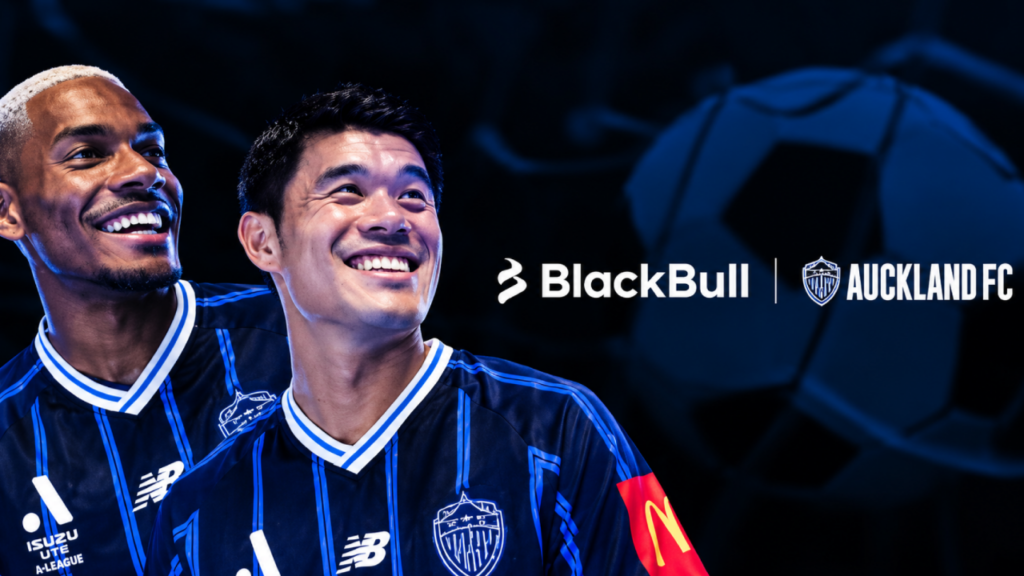
At BlackBull Markets, we believe sponsorships should align authentically with our brand and deliver more than just logos on shirts. That’s why we’re proud to be the Official Trading Partner of Auckland FC in New Zealand’s A-League. As a premium sponsor, this partnership brings our brand into the heart of our home market while showcasing our commitment to supporting local excellence.
The benefits we see go beyond exposure:
- It builds trust and credibility with both existing and potential clients who appreciate a broker that’s embedded in the community.
- It puts real eyes on the brand in a meaningful way — through matchdays, fan content, and regional storytelling.
- It creates genuine engagement opportunities that feel less like advertising and more like shared values.
We’re selective. Not every big-ticket opportunity fits, even when the glamour (hello, F1) is tempting. The key is alignment: does this partnership reinforce what BlackBull stands for — reliable execution, innovation in trading, and long-term client success?
Final Thoughts: Sponsorships as Part of a Balanced Strategy
Sports sponsorships remain a powerful tool for FX brokers, especially as traditional digital advertising faces rising costs and regulatory scrutiny. But they work best when viewed as a branding investment within a broader, multi-channel marketing mix — complemented by performance marketing, content, education, and strong product fundamentals.If you’re on the brand or sponsorship side and considering a deal, ask the hard questions upfront: What does success look like beyond impressions? How will we measure and activate the partnership? And does it truly fit our audience and values?
I’d love to hear from fellow professionals in trading, sports marketing, or sponsorships. Have you seen strong ROI from sports deals, or do you view them primarily as brand builders? What’s the smartest sponsorship strategy you’ve observed in fintech or finance lately?
Drop your thoughts in the comments — let’s discuss.