
My Coinbase Account just went to 0!!!

Credit : Matt Levine, Bloomberg The crypto. A growing number of Coinbase customers are complaining that the cryptocurrency exchange withdrew unauthorized money out of their accounts. In some cases, this drained their linked bank accounts below zero, resulting in overdraft charges. … Coinbase declined to comment on how many users are affected, what the underlying cause of the problem is, and whether it will refund overdraft charges resulting from its duplicate transactions. “We’re aware of the issue and will be posting updates via Reddit, Twitter and our company blog,” a spokesperson said in an email. “We’ll be reaching out to affected users to solve the issue as required, as well as posting updates via social channels.” You know what I say around here: The eventual fate of all Bitcoin exchanges is to lose their customers’ Bitcoins. But Coinbase is different. It is not a grubby dangerous Bitcoin bazaar but a clean well-lit modern Bitcoin supermarket, “the layman’s introduction to the volatile world of cryptocurrencies” with easy bank-account linkages, thorough compliance programs and a New York Bitcoin license. And so instead of losing your Bitcoins, it loses money directly from your traditional regulated bank account! It’s … kind of the worst of all worlds? Elsewhere Atari crypto blockchain blah blah blah, you know the drill: The company says it is investing in a “crypto platform” that will use its own digital currency, the “Atari Token.” It can be used to – you guessed it – play video games. They should hire the “Pocketful of Quarters” kid, he is way better at naming cryptocurrencies than they are. “Atari Token,” come on.
Efficient markets in India?
Credit : Matt Levine, Bloomberg Punjab National Bank, a state-controlled bank in India, “said on Wednesday that it had detected fraudulent transactions worth $1.77 billion at just one of its branches.” (“The Bank has detected some fraudulent and unauthorised transactions (messages) in one of its branch in Mumbai for the benefit of a few select account holders with their apparent connivance,” says the bank’s statement. “Based on these transactions other banks appear to have advanced money to these customers abroad.”) Of course the stock sold off: “Shares of Punjab National Bank closed 10 percent lower on Wednesday on the news of the fraudulent transactions,” and it was down another 12 percent on Thursday. But the fraud represented almost a third of the bank’s market capitalization. Which is more than 10 percent. A $1.77 billion fraud caused only about a $600 million drop in market value the day it was disclosed (and another $664 million the following day). “Most of the fraud was already priced in,” joked Kostya Medvedovsky on Twitter: “The efficient market hypothesis wins again.” Or half-joked I guess. One possibility here is that the $1.77 billion fraud won’t cost the bank $1.77 billion. (“In the Bank these transactions are contingent in nature and liability arising out of these on the Bank shall be decided based on the law and genuineness of underlying transactions,” says the bank’s statement, and it doesn’t appear that it advanced them the money.) But the other possibility is, sure, why not, some of the fraud was already priced in. As of the end of 2017, according to Bloomberg data, Punjab National Bank had assets of about 7.7 trillion rupees, liabilities of about 7.2 trillion rupees, and about 490 billion rupees ($7.7 billion) of shareholders’ equity. It traded at a market capitalization of about 416 billion rupees ($6.5 billion), or about an 85 percent price-to-book ratio. Lazily looking at those numbers, you might note that $7.7 billion (the book equity at the end of 2017) minus $1.8 billion (the amount of the fraud) equals $5.9 billion, and that $6.5 billion (the market cap at the end of 2017) minus $600 million (the first-day market-cap loss on announcement of the fraud) also equals $5.9 billion. It’s almost like the market knew that the bank’s equity was overstated by about $1.2 billion, and when the bank announced that it had been defrauded by $1.8 billion, the market said “oh that is a little more than we thought” and adjusted accordingly. This is a little fanciful but also … probably … correct? There is a lot of precedent for banks’ stocks trading below book value, especially in places and times when people distrust banks. It is a little hard to know what to make of that, but one obvious interpretation is that shareholders don’t believe that the banks’ assets are worth what the banks say they are. We talked the other day about bank opacity, about how not even bank executives seem to understand what is going on inside their banks. If that is the case then it shouldn’t be surprising if sometimes the market thinks the bank is worth less than the bank thinks it’s worth, or if the market turns out to be right. It’s not literally that the market knew about the $1.77 billion fraud before the bank did. It’s just that the whole enterprise is kind of a random-number generator, and the market did a better job of guessing the right random number than the accountants did.
Were you worried about 50 cent?
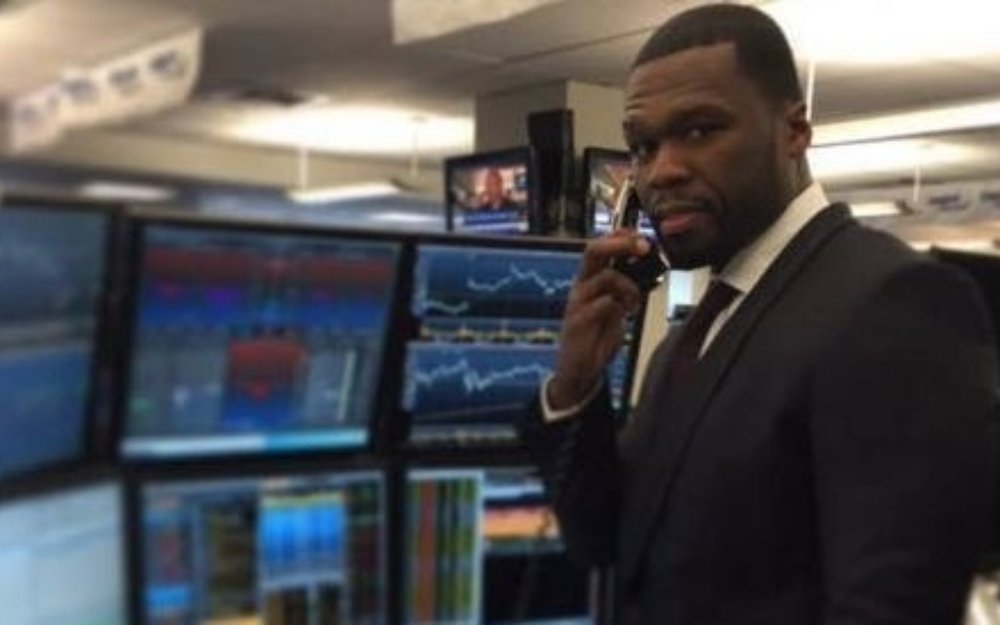
Credit : Matt Levine, Bloomberg An annoyingly pervasive story over the past year or so of low volatility has been that someone has been buying a lot of out-of-the-money call options on the CBOE Volatility Index that would pay off if the VIX spiked. This someone would usually buy the calls that traded at a price of around 50 cents, leading to the buyer being nicknamed “50 Cent,” and many rap lyrics were awkwardly repurposed to discuss these VIX option trades. The story was always the same though: Vol was low, the options didn’t pay off, and Mr. Cent seems to have been down about $200 million since 2017. Well now he gon’ … party … like … it’s … his … I will stop, I am sorry, but here: But as volatility rose last week, and stock markets fell, the strategy paid off. According to Pravit Chintawongvanich, head of derivatives strategy at Macro Risk Advisors, 50 cent held a net profit of $200m on the trade as of February 9. “That means they’ve made about $400 million mark-to-market this month,” said Mr Chintawongvanich.
I can say almost with certainty that they will come to a bad end
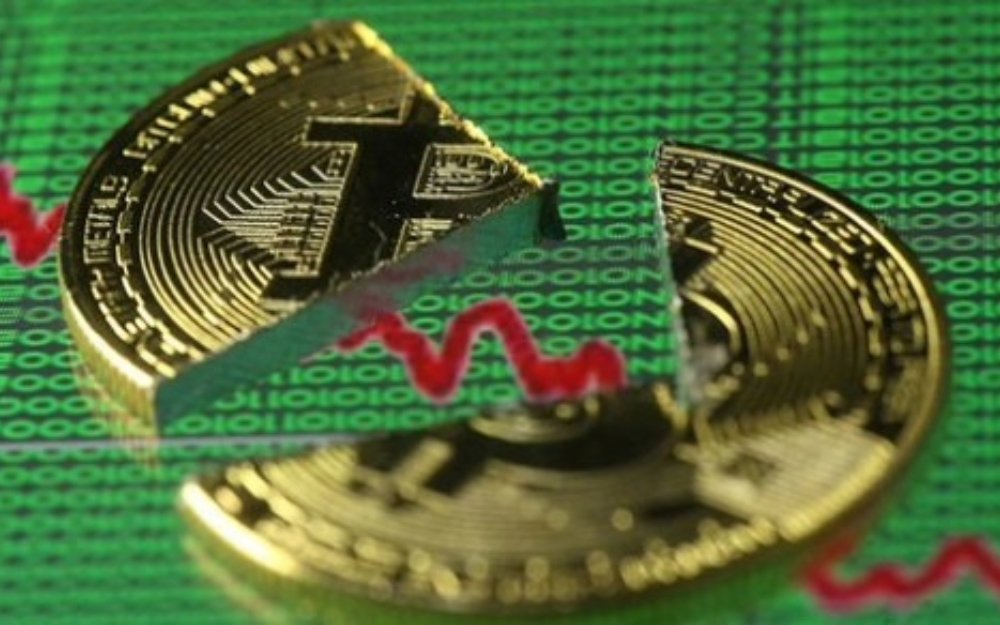
“I can say almost with certainty that they will come to a bad end” now infamous words from Warren Buffett yesterday have been almost timed to perfection with news from South Korea overnight that they are planning a bill to ban Cryptocurrency trading. The speculative hype is nearing an inevitable demise. Who really thought that the Central Banks would not intervene? A huge statement from one of the world’s largest hub for trading virtual currencies. The appetite for Cryptocurrencies is primarily fuelled by demand for tax evasion and unavoidably exchanges are left exposes to being reprimanded. This is exactly what happened in South Korea with the largest exchanges raided by tax agencies, perhaps setting an early precedent for other authorities. This crackdown has clearly calmed frenzied demand for cryptocurrency trading.
New Beginnings

At 26,000 square miles the UAE is smaller than Ireland and has experienced unprecedented growth in the 20th century. Today’s UAE is rich with culture, prosperity and architecture that embraces the golden white sands and blue seas. However, one must not forget the vision of the Sheikhdoms to walk on water and build an eternal wealth for not only Emirate citizens but for all mankind to share.
Is 2017 the year of the Gold shelter?
2017 the year of the Gold shelter? The year has already been trending with Politicians aiming to bash Central Banks and as this critique grows, investors could be looking to seek haven in Gold, especially a reasoning behind the spur above $1,200 per oz yesterday. Could this year be the turning point of the bear? Investors are banking on the demand for Gold rising as political intervention could cause central banks to miss growth targets. Jim Rickards, author of the famous Currency Wars remains even more bullish on Gold as he expects a 10%+ rise in the first quarter of 2017. For those who lose faith in central banks, gold may be the last holdout. It retains its appeal as an asset that once underwrote the monetary system and it can’t be created at will like currencies and bonds, said Matthew Turner, a Macquarie Group Ltd. economist. Gold used to be the centre of the global financial system, for that reason it has a reputation as a currency, however people are confused as to how Trump’s policies will actually impact the Precious metal markets. Since his election, money managers have been pulling money out of SPDR Gold Shares, the world’s largest gold-backed exchange-traded fund, as they seek bigger returns in stocks. At the same time, retail investors have been flooding into the iShares Gold Trust. Gold has risen 6.7 percent since hitting a 10-month low on Dec. 15 and was at $1,197.67 an ounce Friday. The trend for Gold buying looks pretty safe for the long-term.
Who needs the EU – Forza Italia!
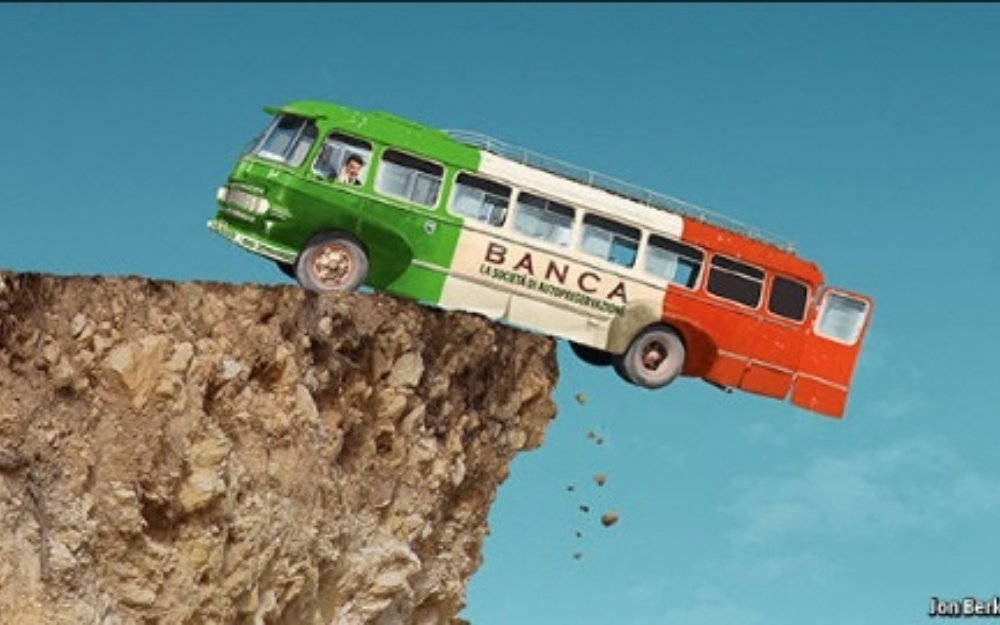
Politics by ego may be the status quo in play here, especially as Chancellor Merkel (the last one standing) who continues to hold the force of the EU behind her. But will her ability to lead the German people through this time be called into question? The momentum is clearly on the side of the “identity” politics, surged by the huge influx of immigration into Europe. Italy was next to fall into limbo following the historic Brexit vote, even though people are predominantly pro-Europe. However, the key is not the common currency, but common values and the idea of both are clearly breaking down. We have seen it with Renzi today, as he struggles to come to terms with leadership.
The Trump USD Bubble, the case of the Yen.
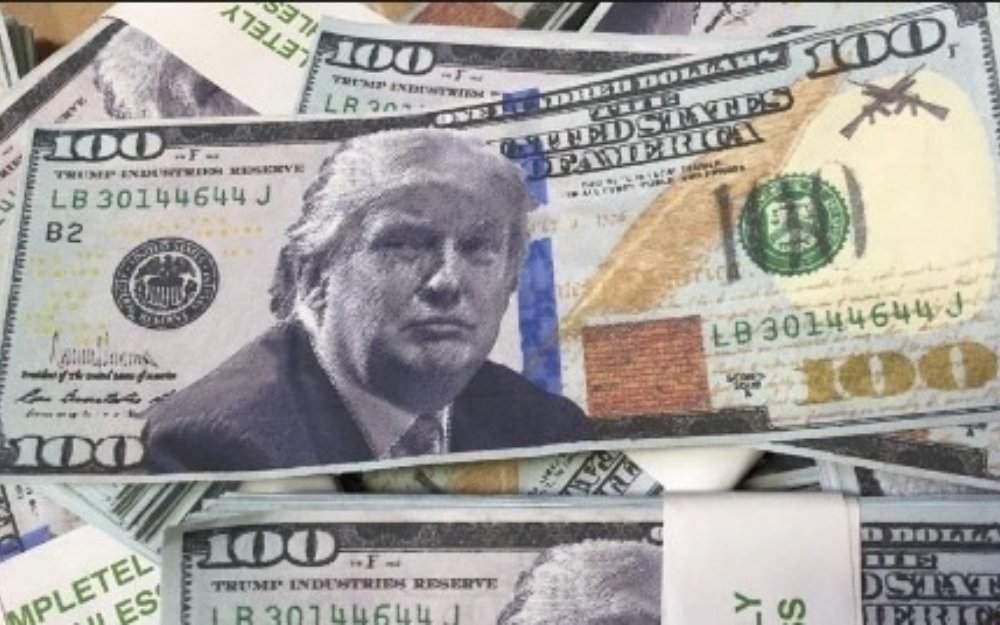
UBS recently stated that the markets and traders alike have completely misinterpreted the Trump victory and believe that the JPY will strengthen to $98 by this time next year. This hypothesis was spear headed by the firm’s Tokyo based research team who cited expectations for fiscal expansions being overstated and how more “protection” style policies will come into play with the new Trump administration. This comes at a time where Trump’s campaign pledging “tax breaks” and more spending over the next decade, in addition to restructuring the entire US trade environment, in fact pushing to sanction firms sending jobs overseas. The markets on the whole have seen the new President elect as a further form of stimulus and this can be seen clearly in the USDJPY cross, where recently the pair reached a month high at 114 capping the biggest three week rally since 1995. It becomes very unclear when trying to analyse the reality behind Trump’s promises and how they will actually become policy. He has already backed away from the Mexico-US wall border, with 10+ nations saying it would be a disaster. This uncertainty really has helped to form FX forecasts, with Japanese analysts very much on the side of a JPY strong hold citing market cycles and market bubbles. For now, the USD still remains relatively strong, however how long could this actually continue for? – How much of a drag could this cause for US businesses’ revenue? Are we actually looking at the next USD bubble and will the markets continue to have faith in Trump’s policies?
I’ve cracked the #Brexit conundrum!
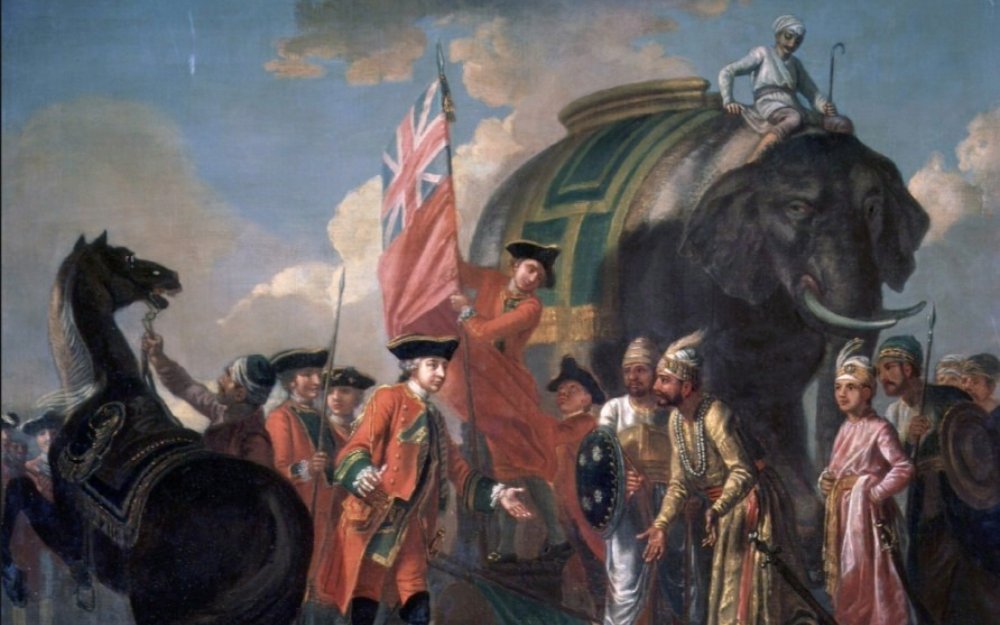
Dear Britain, Please don’t worry about your decision to leave the EU. I have a solution that should relieve both remainers and leavers equally. A moment comes, which comes but rarely, when we step from the old to the new….I’ve cracked the #Brexit conundrum! Cameron needs to immediately apply for Britain to become a Union Territory of the Republic of India. Whilst historically speaking it seems only right and proper to give India a chance to rule Britain for a few hundred years – it actually makes a lot of sense for the British too! Worried about jobs? India’s economy is growing 4x faster than Europe’s and will overtake the entire EU’s sometime in the 2030s – becoming twice the size of the EU economy by 2050. In economic terms alone every young Brit should wish to replace their garish red EU passport with a classy blue Indian one ASAP. Worried about the future of the NHS? India already provides nearly as many Doctors to the NHS as the EU does – and that doesn’t even include those of Indian origin, born or educated, in Britain. 25,055 Indian v 30,082 EU. Worried about diversity? With over 100 different languages spoken everyday and adherents of every religion – even Britain’s favourite materialist consumption – there truly is something for everyone here! Worried about being understood? English is one of India’s two official languages – which will be a huge relief for all those have struggled to communicate with their continental neighbours for all these years. Worried about not being part of something bigger? India has more than twice the population of the EU. Half of which are under 35, so the bonus is no more worries about an ageing population! Worried about where to go on holiday? The Himalayas are nearly three times the height of the Alps and thousands of miles longer – there are more sandy beaches along India’s coastline than all the Costas you can dream of – and India has tropical rainforests and even a desert too! Plenty of visa free inter-railing adventures as well on the world’s largest railway network. Worried about not being ruled by an unlected bureaucracy in a far away land? We’ve got that covered as well! Nowhere on the planet has perfected the shuffling of paper and writing of rules better than New Delhi – what’s more India’s civil servants salaries are more than 10x lower than Brussels. Talk about getting more for less! British MPs, the whole of Whitehall and even the Royal Family (subject to the return of the Kohinor) can all be pensioned off at the fast expanding and internationally renowned Best Exotic Marigold Hotel chain in Jaipur. Which would free up the Houses of Parliament, Buckingham Palace and much of Central London to become a permanent Bollywood film set. With more viewers than Hollywood this is sure to help keep London’s tourist economy going – which within a decade or two will be mostly Indians in any case. Embrace the 21st Century. Swap Brussels for Delhi. Say Goodbye to Little Europe and Namaste to Incredible India! Yours in waiting,A 3rd Generation Immigrant of British Origin,New Delhi, India🙏
#BrexitVote = A Genuine Clusterfuck!
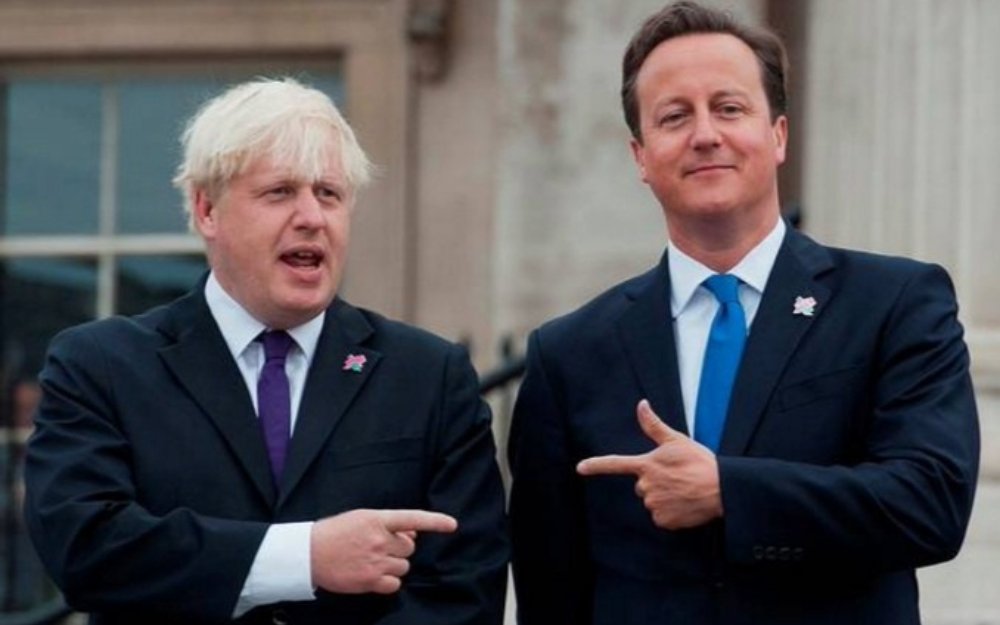
137 billion pounds was wiped off the value of the UK stockmarket in the first nine minutes of trading. That’s the equivalent of nine years EU membership fees. The falling value of the pound will cause the cost of imports to rise, making things more expensive on the high street. The poorer parts of Britain have used the referendum as a vote on globalisation: they’ve been shafted by continuous British governments since 1979, governments who have off-shored their jobs, used immigration to lower their wages and deregulated banks to provide cheap credit to fund their consumption. None of this will change outside of the EU. The problem always was, is and will be that domestic UK politicians do not represent the interests of the traditional working class, they represent international finance. And under Johnson and Gove they still will. The UK is an international CAPITALIST economy, it needs inward investment to pay for its current account deficit (debt), which is massive. 50% of our inward investment came from the EU in 2015. Low wages – yes even with George Osborne’s supposed ‘living wage’ – help to attract this investment. Immigration is a structural part of the UK economy and this is not going to change any time soon. Even Farage said he would use migrants from the Commonwealth (lol – that basically ended in 1956 @Suez), rather than the EU. Immigration will not stop, but our economy will probably take a huge battering: The UK economy is 79% services, services are harder to trade than manufactured goods because of the fact that people are integral to services, you can’t just ship them overseas like a bag of spanners. The UK had a free ‘passport’ to trade services in the EU. The City of London (services) generates 10% of the UK’s total GDP. Roughly a quarter of the UK’s financial sector business involves the EU’s Single Market, equivalent to 2 per cent of gross domestic product. And balanced on top is a wider array of professional services. (Financial Times). Plus: developed countries buy more services than developing countries who are at a different stage in their economic development. The EU is made up of some of the richest developed countries on the planet. The entire structural configuration of our economy favours services sold to developed countries and we just risked putting the kibosh on that. Smart move. There’s more. Free trade agreements take years to negotiate, and the UK will be screaming out for FTAs to ensure trade based on best possible terms, rather than the default WTO position – yes that’s right, even on leaving the EU there are other international organisations we have to conform to, we call this the modern world – Under WTO there are 10% import tariffs on automotive manufacturing, one of the last bastions of manufacturing in the UK. Without an FTA all UK automotive exports will see a 10% tariff slapped on them. Let that sink in for a moment. A UK crying out for FTAs will give negotiating partners leverage, the UK does not have the upperhand here. And as for an EU-UK FTA, the UK is 5% of global GDP (2015), the EU 26%, who do you think will have the upperhand in those negotiations? As for us importing more from the EU than we export, we need those goods, for our standard of living and for our domestic supply chains. The fact that we import so much is not automatically something that works in our favour! Trade is not a zero sum game. And when all these British citizens fund out that they’ve been lied to over the next few years they’re going to be absolutely furious. And who do you think they will vote for then? Angry men with easy answers and tiny little moustaches maybe? I’m pretty sure it won’t be Corbyn with his mystical magical 1970s timemachine. This is a genuine clusterfuck. Cameron has risked the union of the Kingdom – Northern Ireland voted remain 56%, Scotland 62% – and the wider EU in trying to appease to racists, the angry and the ignorant. This is not the behaviour of a statesman. It is the behaviour of an opportunist and a coward. His name will go down in history as the man who accidentally broke up Britain. Hold on to your bowler hats, its about to get bumpy.