
The Rise of Coordinated Hedging Groups in Southeast Asia – A Deep Dive into Risk, Regulation, and Retail Trading Dynamics

In the fast-evolving world of retail forex and CFD trading, Southeast Asia continues to stand out as a powerhouse of retail participation. Countries like Malaysia and Vietnam have seen explosive growth in trader communities, driven by high mobile penetration, improving financial literacy, and access to global brokers offering competitive leverage and tools like negative balance protection (NBP). While most traders focus on technical analysis, risk management, and fundamentals, a more coordinated and controversial phenomenon has emerged: hedging groups. These organised networks, often operating via Telegram, WhatsApp, or local forums, use opposing positions across multiple accounts to exploit specific broker features, particularly NBP during high-volatility events like weekend gaps or volatile market opens. Understanding Negative Balance Protection NBP is a client protection mechanism where brokers reset an account to zero if losses exceed the deposited balance due to extreme market moves (e.g., news-driven gaps). It prevents clients from owing money and is standard for retail clients under many regulators. BlackBull Markets provides it for eligible clients, aligning with our commitment to responsible trading. Brokers absorb these losses (or manage them via hedging/liquidity providers), which is why terms of service often explicitly prohibit abusive practices designed to trigger NBP systematically. The Classic Friday-to-Monday Play The strategy described in trader circles works like this (hypothetical, for educational purposes only): Setup on Friday Close: Two (or more) coordinated accounts/groups take opposing positions on a volatile instrument (e.g., major forex pairs like EURUSD, indices, or commodities). One group/account goes significantly long, the other short. Positions are sized to maximize exposure relative to account balance, often using high leverage. Weekend/Volatile Open Risk: Markets can gap sharply on news (geopolitical events, economic data releases, or thin liquidity). One side moves deep into profit; the other incurs massive losses. The Trigger: The losing side hits negative territory. With NBP, the broker resets that account to zero — effectively “covering” the excess loss. The winning side captures the full (or near-full) profit from the gap/move. Net Outcome: If coordinated well, the group’s collective profit from the winner(s) can exceed the “cost” of the wiped-out account(s). The broker absorbs the negative on the losing side. This is often amplified in groups from Malaysia and Vietnam due to: Strong community networks and social trading culture. Preference for high-leverage brokers accessible to retail traders in the region. Timing around Asian/European session overlaps or global events creating weekend gaps. Similar patterns have been flagged in industry discussions as “group hedging schemes” or multi-account manipulation. This can also be repeated across several brokers. Why Southeast Asia? Cultural, Economic, and Structural Factors Malaysia and Vietnam boast vibrant retail trading scenes: Malaysia: Strong English proficiency, regulatory awareness (via bodies like SC Malaysia), and a growing middle class interested in alternative investments. Traders often blend halal considerations with global markets. Vietnam: Rapid digital adoption, young population, and high appetite for leveraged products. Local groups share signals and strategies efficiently via apps. These factors foster tight-knit communities where collective strategies spread quickly. Economic volatility, currency fluctuations (e.g., VND, MYR), and global risk sentiment make gap trading appealing. However, this isn’t unique to Asia — similar tactics appear globally wherever NBP + high leverage exists. The difference is scale and coordination enabled by regional social dynamics. Risks and Downsides (The Reality Check)While the strategy sounds like “free money” on paper, deep dive reveals significant pitfalls: Broker Countermeasures: Many firms (including sophisticated ones) monitor for abuse patterns — identical/symmetrical positions across accounts, unusual volume at close, etc. Accounts can be flagged, profits withheld, or relationships terminated. NBP often excludes cases of market abuse. Detection and Enforcement: Slippage, partial fills, or requotes during volatility can disrupt symmetry. Brokers share data via liquidity networks. Regulatory Scrutiny: In jurisdictions emphasizing investor protection, systematic exploitation can lead to broader restrictions on leverage or NBP. Capital and Psychological Cost: Wiped accounts require fresh deposits. Greed can lead to over-leveraging across the group, resulting in net losses if moves aren’t extreme enough. Ethical and Long-Term View: This shifts risk unfairly to the broker/ecosystem, potentially raising costs (spreads, commissions) for all traders. Sustainable success comes from skill, not gaming protections. At BlackBull Markets, we prioritise fair execution, deep liquidity, and transparent conditions to support genuine traders, not schemes that undermine market integrity. A Better Path Forward for Asian Traders – Instead of zero-sum games against the broker: Master genuine hedging (where allowed) for risk reduction, not exploitation. Use tools like stop-losses, position sizing, and volatility filters. Leverage education: BlackBull offers resources on risk management and market analysis. Focus on long-term edge: Algorithmic trading, fundamental research, or diversified portfolios. Community value: Shift groups toward signal sharing, education, and collective learning. Southeast Asia’s traders have immense potential. Malaysia and Vietnam are producing sharp, tech-savvy market participants who can compete globally through skill rather than loopholes. I’ve seen the evolution of retail trading firsthand. We remain committed to providing robust platforms (MT4/MT5/cTrader), tight spreads, and fast execution — while enforcing policies that protect the ecosystem for serious traders. What are your thoughts? Have you encountered coordinated strategies in your markets? Share responsibly in the comments — let’s discuss ethical innovation in trading. Risk Warning: Trading involves substantial risk of loss. Negative balance protection does not guarantee profits and is subject to terms. Always trade responsibly.
The Evolution of Sports Sponsorships in FX: From Football Fields to Cricket Pitches and Tennis Courts – And Why It’s Mostly About Branding

I get pitched sponsorship opportunities almost weekly. The latest wave? Formula 1 deals, with minimum asks starting around $2 million USD for meaningful visibility. It’s a familiar conversation in our industry: sports sponsorships have become a go-to marketing play for forex and CFD brokers. But let’s take a step back. How did we get here, and is the spend actually delivering the returns everyone hopes for? A Brief History: How FX Brokers Discovered Sports The trend kicked off around 2010 when FxPro made waves by sponsoring Premier League clubs like Fulham and Aston Villa, as well as early involvement with Virgin Racing in Formula 1. It was a smart move at the time. Retail forex trading was exploding, and brokers needed a way to reach a young, male, globally dispersed audience that loved speed, competition, and performance, qualities that mirror trading itself. Football quickly became the dominant arena. Brokers like Plus500 (Atlético Madrid), eToro (multiple clubs across Europe), Libertex (Bayern Munich), and others poured millions into shirt sponsorships, stadium branding, and official partnerships. At one point, football accounted for the majority of online trading sponsorship spend, with brokers chasing the massive global TV audiences and passionate fanbases. The strategy soon diversified: Cricket gained traction in key growth markets like India, Australia, and emerging regions. Brokers targeted regional teams or players to tap into cricket’s dedicated following where football isn’t king. Tennis offered a more premium, individual-athlete angle — global reach with opportunities for targeted territorial deals around major tournaments or players. Other sports followed: rugby, golf, basketball (e.g., Plus500 with Chicago Bulls), and of course, a renewed interest in Formula 1 as the sport’s popularity surged with new audiences and digital platforms. Today, brokers spread bets across football, motorsport, and niche/local sports to avoid clutter and align with specific regional priorities. The industry has collectively invested hundreds of millions into these deals over the past 15+ years. The ROI Reality: Strong Branding, Challenging Direct Returns Here’s the honest conversation many in the sector have privately: measuring precise ROI on sports sponsorships is tough, and for many brokers, the primary value is branding and credibility rather than immediate client acquisition or trackable conversions. Sports partnerships deliver clear benefits: Massive brand exposure through TV broadcasts, stadium signage, digital content, and fan engagement. Association with success, precision, and performance — values that resonate with traders who see parallels between elite athletes/teams and disciplined market analysis. Trust and legitimacy boost. In a competitive, sometimes skeptical industry, appearing alongside respected clubs or events signals stability and professionalism. However, turning that visibility into measurable account openings or trading volume often proves elusive. Many brokers struggle to attribute direct revenue to these spends. Media value calculations help, but lead generation, conversion tracking, and long-term client lifetime value are harder to pin down. The clutter in popular spaces like the Premier League means diminishing marginal returns for some. It’s why smarter players now mix high-profile deals with targeted, regional, or lower-cost partnerships. In short: it’s often more art than science — a long-term play for brand equity rather than a short-term acquisition channel. Our Approach at BlackBull Markets: Auckland FC as a Case Study At BlackBull Markets, we believe sponsorships should align authentically with our brand and deliver more than just logos on shirts. That’s why we’re proud to be the Official Trading Partner of Auckland FC in New Zealand’s A-League. As a premium sponsor, this partnership brings our brand into the heart of our home market while showcasing our commitment to supporting local excellence. The benefits we see go beyond exposure: It builds trust and credibility with both existing and potential clients who appreciate a broker that’s embedded in the community. It puts real eyes on the brand in a meaningful way — through matchdays, fan content, and regional storytelling. It creates genuine engagement opportunities that feel less like advertising and more like shared values. We’re selective. Not every big-ticket opportunity fits, even when the glamour (hello, F1) is tempting. The key is alignment: does this partnership reinforce what BlackBull stands for — reliable execution, innovation in trading, and long-term client success? Final Thoughts: Sponsorships as Part of a Balanced Strategy Sports sponsorships remain a powerful tool for FX brokers, especially as traditional digital advertising faces rising costs and regulatory scrutiny. But they work best when viewed as a branding investment within a broader, multi-channel marketing mix — complemented by performance marketing, content, education, and strong product fundamentals.If you’re on the brand or sponsorship side and considering a deal, ask the hard questions upfront: What does success look like beyond impressions? How will we measure and activate the partnership? And does it truly fit our audience and values? I’d love to hear from fellow professionals in trading, sports marketing, or sponsorships. Have you seen strong ROI from sports deals, or do you view them primarily as brand builders? What’s the smartest sponsorship strategy you’ve observed in fintech or finance lately? Drop your thoughts in the comments — let’s discuss.
What are Perps? Explained by a 5-year old who likes cars!

🚀 Ever wondered how traders bet on Bitcoin or gold prices going up or down… forever? Let me explain Perpetual Futures (and how everyday brokers make it easy) in simple terms. Imagine you’re 5 years old and you have a magic toy car. You don’t actually own the real car. Instead, you play a game guessing whether its price will go up or down. With perpetual futures (also called “perps”), you can keep playing that game as long as you want, there’s no “game over” date. You put down a little of your own money (margin) to control a much bigger position thanks to leverage. If you guess right, you win money. If you’re wrong, you can lose fast. To keep the game fair and the guessed price close to the real toy car’s price, players sometimes share a tiny bit of “candy” (called the funding rate) every few hours, longs pay shorts or vice versa. It’s exciting… but risky, like racing on roller skates. You can win big or fall hard.How CFD Brokers Offer Something Very Similar. Many traditional CFD brokers don’t use the exact crypto-style perpetual futures with funding rates between traders. Instead, they offer perpetual-style CFDs (Contracts for Difference) that work almost the same way :- No expiration date → hold your position for days, weeks, or months. – You speculate on price moves (up or down) without ever owning the real asset (Bitcoin, forex pairs, gold, stocks, etc.). – Leverage lets you control a large position with small capital. – Instead of a peer-to-peer funding rate, the broker usually charges a small daily overnight/swap fee (like a rental cost for the leverage).You’re essentially playing the guessing game directly with the broker as your counterparty. Popular CFD brokers offering these kinds of never-ending contracts on crypto, forex, and more brokers. Key takeaway: True perpetual futures are usually traded on big crypto exchanges (peer-to-peer with funding rates). CFD versions from brokers are simpler, more accessible in many countries, and mirror the spot price directly with daily fees. Both tools let traders get leveraged exposure without owning the asset and without worrying about contract rollover. ⚠️ Important reminder: These are high-risk instruments. Leverage can amplify losses as well as gains, and you can lose more than your initial deposit. Always trade responsibly, use risk management, and only risk what you can afford to lose. What’s your experience with perpetuals or CFDs? Are you using them for crypto, forex, or something else? Drop a comment below, I’d love to hear!
Empowering the Next Generation of Traders: 2026 Competition Launch Highlights
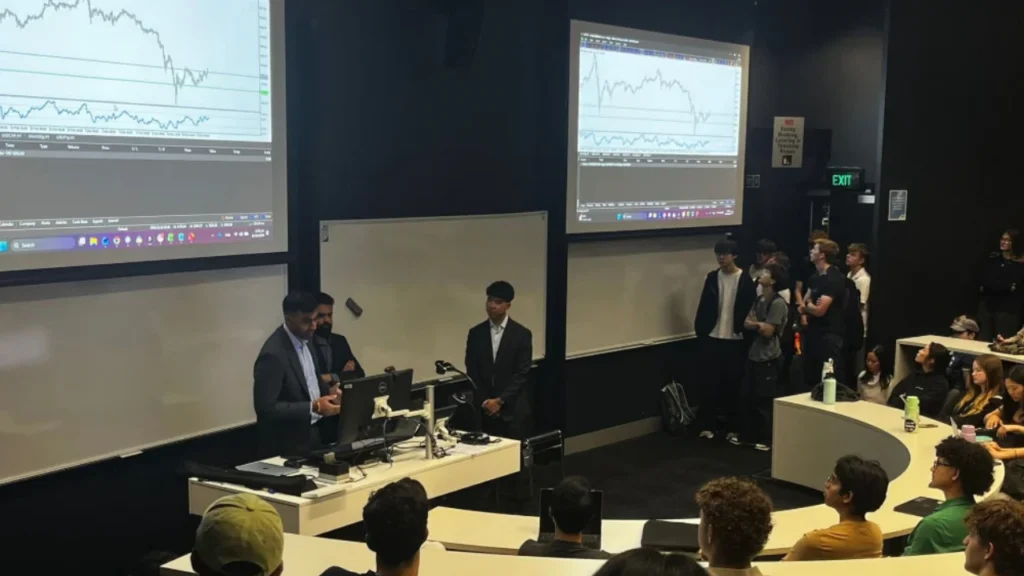
🚀 Excited to share that yesterday we ran an impactful workshop with the University of Auckland Investment Club for over 100 enthusiastic students! We officially launched our 2026 Trading & Investing Competition in partnership with the club — and the response has been incredible: over 300 sign-ups already! 🎉 This is a new record for us. Over the past 6 years of running this competition, we’ve seen a clear trend: students are becoming increasingly active and engaged with trading and investing. These workshops are about more than just charts and strategies. The key takeaways we emphasized were: ✅ Risk Management — Protecting capital is priority number one ✅ Building a solid Trading Plan — Discipline over emotion ✅ Emotion Management — Staying calm during market volatility ✅ Long-term Strategy — Thinking beyond short-term gains for sustainable success. It was fantastic to see so many sharp, motivated young minds in the room, asking great questions and showing real hunger to learn. A huge thank you to the University of Auckland Investment Club for the collaboration and to everyone who attended and signed up. The energy in the room was outstanding! If you’re a University of Auckland student and haven’t signed up yet — there’s still time! The competition is going to be bigger and better than ever in 2026. Who else is excited to see the next generation of investors and traders rising up? 👇
The Future of Forex Brokerage: What Traders and Partners Should Expect

The future of forex brokerage is being shaped by a combination of technology, transparency, regulation, and changing client expectations. What was once a highly competitive industry focused mainly on spreads and platform access has evolved into a much broader and more demanding environment. Today, traders are looking for more than just access to the markets. They expect fast execution, reliable platforms, transparent pricing, strong support, and a broker they can trust over the long term. Partners and affiliates are also becoming more selective, choosing to work with brands that offer professionalism, stability, and long-term growth potential. One of the biggest factors influencing the future of forex brokerage is execution quality. As traders become more informed, they are paying closer attention to the details that affect their overall experience. Execution speed, pricing consistency, liquidity access, and platform performance are no longer secondary considerations. They are central to how traders evaluate a broker. In fast-moving markets, even small differences in execution can make a meaningful impact. This is why modern brokerages are investing more heavily in infrastructure, technology, and trading environments that can deliver speed and stability at scale. Transparency is also becoming a defining feature of the industry. Traders want to understand how brokers operate, how pricing is structured, what execution model is being used, and what level of reliability they can expect. This shift is positive for the market because it encourages better standards and more responsible communication. A transparent forex broker is far more likely to build long-term trust than one relying only on aggressive marketing. As competition continues to increase, trust will become one of the most valuable assets a brokerage can have. Technology will continue to play a major role in shaping the future of forex brokers. Better charting tools, smoother integrations, improved onboarding, mobile-friendly experiences, and smarter reporting are all raising expectations across the industry. Traders now want a seamless experience that combines performance with convenience. At the same time, partners want stronger systems, clearer reporting, and better support to help them scale their efforts effectively. The brokerages that succeed in the years ahead will be those that embrace innovation while keeping the client experience simple, fast, and dependable. Regulation and compliance will remain equally important. As the forex industry continues to mature, brokers will need to balance innovation with responsibility. Traders are paying more attention to security, disclosures, and the credibility of the businesses they engage with. Partners are also looking for brands that can support long-term growth in a responsible and sustainable way. The future of forex brokerage will not be built on visibility alone. It will be built on performance, trust, and operational integrity. For traders, this means expectations will continue to rise. They will increasingly look for brokers that offer a strong mix of execution speed, platform quality, transparency, and service. For partners, it means working with brokerages that value communication, reliability, and long-term relationships rather than short-term wins. In both cases, the market is moving toward higher standards, and that is a healthy sign for the industry as a whole. The future of forex brokerage will belong to firms that can combine technology with trust and growth with consistency. In a market where clients have more information and more options than ever before, the brokers that stand out will be the ones that deliver real value through performance, transparency, and a clear long-term vision.
Trust in the Trading Industry: Why Transparency Matters More Than Ever

Trust has become one of the most important factors in the trading industry. In a market that moves quickly and often feels complex to many participants, traders are no longer looking only for access, pricing, or platform features. They also want clarity. They want to understand who they are dealing with, how a broker operates, what costs may apply, and whether the overall environment is built on fairness and reliability. This is why transparency matters more than ever. The trading industry has evolved significantly over the years. As competition has increased, so has the amount of information available to traders. Today’s clients are more informed, more selective, and more willing to ask questions before choosing where to trade. They want to know how execution works, how pricing is structured, what level of support they can expect, and whether the company behind the platform communicates openly and responsibly. This shift is positive for the industry because it encourages higher standards and creates stronger long-term relationships between brokers and clients. Transparency helps remove uncertainty. When traders clearly understand the environment they are entering, they are more likely to make informed decisions and more likely to feel confident in the relationship. A broker that communicates clearly about its services, policies, pricing, and processes builds a stronger sense of credibility than one that relies only on marketing claims. In a competitive market, that credibility can become a major point of difference. This is especially important because trust is not built through branding alone. It is built through consistency, communication, and the ability to deliver what is promised. Traders notice when information is presented clearly and when expectations are realistic. They also notice when details are vague or when important information is difficult to find. In many cases, transparency is what turns initial interest into long-term confidence. Transparency also plays an important role in shaping the overall reputation of the trading industry. For many people, trading can still feel intimidating or difficult to understand. When firms communicate openly and operate with greater clarity, they help create a more professional and trustworthy environment for everyone involved. This benefits not only traders but also partners, affiliates, and the broader market, because stronger trust tends to support stronger and more sustainable growth. Technology has also raised expectations around transparency. Modern traders expect clearer reporting, easier access to information, smoother communication, and better visibility into the services they use. As the industry becomes more digital and more competitive, the ability to present information in a simple, honest, and accessible way is becoming increasingly valuable. Transparency is no longer just a compliance requirement or a nice addition. It is a core part of a strong client experience. For brokers and financial service providers, this means transparency should be viewed as a strategic strength rather than an obligation. Firms that are open about their processes, realistic in their messaging, and committed to clarity are more likely to earn trust over time. That trust supports retention, strengthens partnerships, and helps create a more resilient brand in a crowded market. In the future, trust will continue to shape how traders choose who to work with. Pricing, technology, and platform experience will always matter, but confidence in the business behind those services will matter just as much. Transparency is what helps create that confidence. In a market where traders have more options and more awareness than ever before, firms that prioritize openness and clarity will be in a stronger position to build lasting relationships. Trust in the trading industry is not something that can be assumed. It has to be earned. And in today’s environment, transparency remains one of the clearest ways to earn it.